Why Your Case Studies Convert But Remain Invisible

The Hidden Conversion Asset
Case studies are your secret conversion weapon. They consistently outperform other content, converting 3-5x higher than your average blog post, and prospects who read them are 60% more likely to request a demo.
Yet, despite their high conversion potential, most case studies sit unseen, receiving only 2% of your organic traffic.
This article uncovers why your case studies aren’t being discovered and provides a step-by-step blueprint to fix the problem, making your best social proof visible, citable, and scalable.
The Case Study Visibility Problem
What Your Analytics Probably Show
Typical case study performance looks like this:
Case Study: “How Company X Increased Revenue 40%”
- Monthly organic visits: 12
- Monthly direct visits: 145 (from email, sales sharing)
- Conversion rate when visited: 12% (very high)
- Total impact: Limited by invisibility
Compared to blog content:
Blog Post: “Email Marketing Tips”
- Monthly organic visits: 1,200
- Conversion rate: 2.1%
- Total conversions: 25 vs. the case study’s 2
The irony: Your best-converting content gets the least traffic.
This pattern is common across industries. In a Reddit discussion, an e-commerce SEO shared that after six months of thorough SEO work, including technical optimization, internal linking, and content updates, they still saw virtually no growth in organic traffic, underscoring how visibility issues persist when content isn’t aligned with what people actually search for.
6 Months of Hard SEO Work, Zero Growth. I'm Feeling Defeated
byu/Design_Inspire_1354 inSEO
Why Case Studies Don’t Rank
Reason 1: No Search Demand for Company-Specific Stories
Nobody searches:
- “Company X case study”
- “How [Your Brand] helped Client Y.”
- “[Client Name] success story”
Insight: Traditional case study titles target zero-volume keywords.
In fact, experienced SEO professionals on Reddit recently shared how one client went from nearly invisible in search to real growth only after shifting focus from generic pages to content aligned with search intent, strategic internal linking, and broader topical relevance, emphasizing that discoverability begins with understanding what people actually search for.
[Case Study] How I Grew a Client's Organic Traffic by 1,480% in 11 Months (With Real GA4 Data)
byu/darmaan-seowizard inSEO_Experts
Reason 2: Generic, Non-Searchable Titles
Common patterns:
- “Customer Success Story: [Client Name]”
- “Case Study: [Industry] Company Sees Results”
Problem: People search for solutions to problems, not stories about companies they have never heard of.
Reason 3: Buried in Case Study Sections
Typical URL structure:
- yoursite.com/case-studies/
- yoursite.com/case-studies/client-a
- yoursite.com/case-studies/client-b
- yoursite.com/case-studies/client-c
Why this hurts:
- Isolated from main content
- No topical relevance signals
- Often, PDFs (not indexed well)
- No internal linking from related content
Reason 4: No Keyword Targeting or SEO Optimization
Missing elements:
- Keyword research for topics
- SEO-friendly titles, meta descriptions, and alt text
- Structured data
- Internal linking
Reason 5: No Educational Wrapper
Current format: Challenge → Solution → Results
Why it doesn’t rank:
- Too client-specific
- Lacks detailed “how-to” guidance
- Limited value for a broader audience
- Doesn’t build topical authority
What People Actually Search For
Not searched:
- “SaaS marketing case study”
- “B2B content marketing success story”
Actually searched:
- “How to reduce customer churn in SaaS” – 18,000/month
- “B2B content marketing strategies that work” – 8,200/month
- “How to increase MRR” – 4,800/month
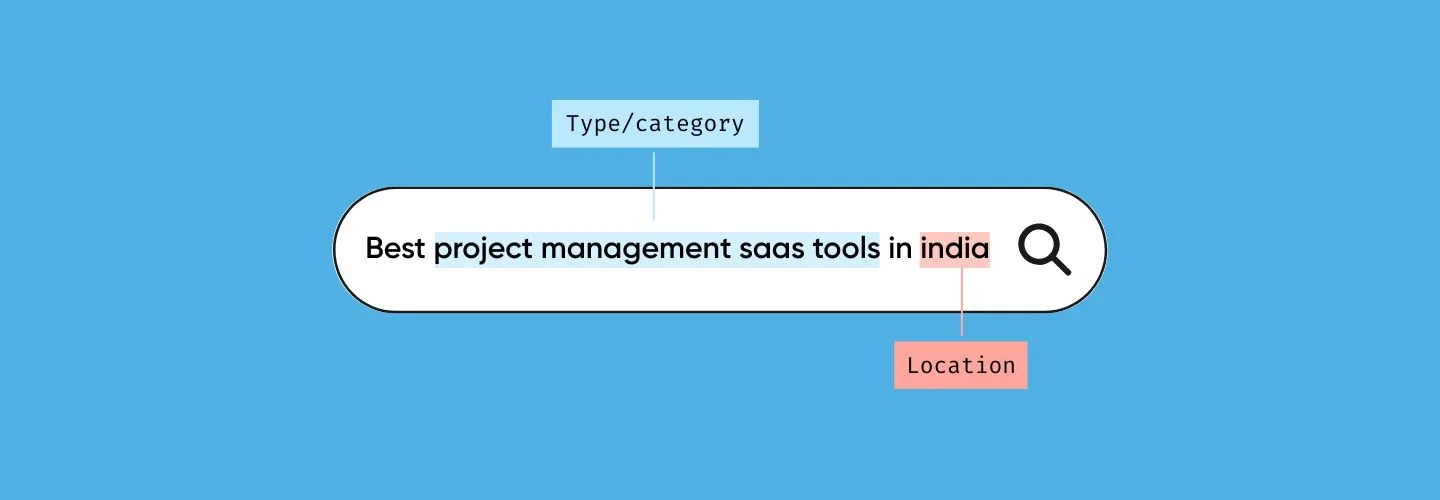
Insight: People search for problems, solutions, and strategies, not case studies.
The Four Searchable Case Study Angles
- Problem-Focused: “How to Reduce SaaS Churn from 8% to 3%: Real Implementation.”
Targets search query: “how to reduce SaaS churn.”
- Result-Focused: “From $50K to $200K MRR in 9 Months: The Complete Strategy.”
Targets query: “How to grow MRR quickly.”
- Method-Focused: “Content Marketing Strategy That Generated 480 SQLs: Step-by-Step”
Targets query: “content marketing strategy for lead generation.”
- Industry-Specific: “How a Healthcare SaaS Achieved HIPAA Compliance While Scaling: Complete Roadmap”
Targets query: “HIPAA compliant SaaS scaling.”
The Searchable Case Study Framework
Format 1: Hybrid Case Study / Guide
Title: How to [Achieve Result] for [Audience]: Strategy That Worked for [Client Type]
Structure:
- Introduction: Industry context + what readers will learn
- Challenge: Explain the problem in educational terms
- Context: Why standard approaches fail
- Strategy: Methodology with replicable steps
- Implementation: Step-by-step process
- Results: Quantified outcomes + lessons learned
- Key Takeaways: Principles anyone can use
- Related Case Studies: Internal links
That emphasis on intent and user value is mirrored in broader SEO trends. In another Reddit discussion, marketers confirmed that intent‑based topical clusters and long‑form educational content are currently outperforming simple transactional pages and generic posts, because they match real user queries and then link internally across relevant topics.
What type of content is driving the most organic traffic for you right now in SEO?
byu/ace_web_experts inDigitalMarketingHack
Format 2: Transformation Story
Title: From [Starting Point] to [End Point]: How [Client Type] [Achieved Result]
Focus: Journey and obstacles overcome
Format 3: Comparison Format
Title: [Method A] vs [Method B] for [Goal]: Real Results from [Client Type]
Focus: Transparent, data-driven comparison, helps others make the same decision, demonstrates expertise, and benchmarks.
To make your case studies truly discoverable, check Most SEO Projects Don’t Need More Tactics, They Need Clarity. This approach helps prioritize case studies that can be optimized for maximum visibility and impact.”
Implementation Strategy
- Audit Existing Case Studies: Extract problem, result, method, industry, timeframe, key tactics, and obstacles. Identify searchable angles.
- Keyword Research: Use tools (Google Keyword Planner, Ahrefs, SEMrush, Search Console). Pick primary and secondary targets.
- Expand Case Study into Guide Format: Add educational context. Transform a 350-word case into a 2,500-word guide. Make the client story proof within educational content.
- Optimize Structure and Format: Titles, headers, URLs, table of contents, schema markup.
- Build an Internal Linking Strategy: Link from blogs, service pages, and other case studies.
Advanced Tactics for Maximum Visibility
- Extract multiple assets from one case study: guides, deep-dives, data posts, process documentation.
- Create industry-specific case study hubs
- Add comparison elements for benchmarks and AI citation
- Update with “Still Working” validations to show sustained results
- Guest post case study content for external authority signals + backlinks
Making Case Studies AI-Citable
- Lead with data and specifics
- Use structured sections AI can parse
- Include benchmarks and comparisons
- Ensure the client’s story is proof within an educational wrapper
Measuring Success
| Metric | Before | After |
|---|---|---|
| Organic visits | 8-15 | 400-600 |
| Ranking keywords | 2-3 | 25-40 |
| Conversions | 1-2 | 15-20 |
| AI citations | 0 | 3-5 |
Timeline: 2-3 months for visible results
Common Mistakes to Avoid
- Just changing the title
- Removing the client story
- Making it too general
- No call-to-action
- Weak results/data
Fix: Expand into a guide format with educational value, proof, specificity, and clear next steps.
Implementation Roadmap
- Month 1: Audit & research case studies
- Month 2: Rewrite the top 3 into a guide format
- Month 3: Expand & promote
- Month 4-6: Measure, optimize, continue transforming remaining case studies
- Ongoing: Create new case studies in guide format, update quarterly, build internal linking, track conversions
Key Takeaways
- Traditional case studies target zero-volume keywords
- People search for problems and solutions, not case studies
- Guide format with proof works, an educational wrapper makes it searchable
- Specificity matters; vague results don’t rank or get cited
- One case study can become 5+ assets
- Internal linking multiplies impact
- 2-3 months for a 10-20x traffic increase is typical
- Your best conversion asset should be your most visible
Curious if Your Case Studies Are Truly Being Discovered?
Your case studies prove ROI. They demonstrate expertise. They overcome objections. They close deals. But if only your sales team can find them, you are wasting your best asset.
The fix isn’t complicated: Make them searchable. Add educational value. Target real queries. Build them into your content ecosystem.
Your case studies shouldn’t be hidden success stories. They should be your most visible proof that what you do actually works. If you are not sure whether they are being discovered by prospects, search engines, or even AI tools, you can quickly sanity-check it with us.
Share a bit of context about your content and how you are measuring visibility here: https://tally.so/r/3EGEd4
No audits. No dashboards. No AI hype. Just a short form to help you understand whether your case studies are reaching their potential and what practical next steps could make a difference.
FAQs
Most case studies target zero-volume keywords like client names or generic “success story” titles. People search for solutions to problems, not for stories about companies they have never heard of.
Focus on problem-focused, result-focused, or method-focused titles. Wrap the case study in an educational context, include detailed methodology, and target keywords that people actually search for.
No. The client’s story is proof of credibility. The trick is to embed it within an educational framework, so readers learn while seeing real-world results.
Typically, 2-3 months for significant traffic increases and rankings, depending on the industry and competition. Full visibility and AI citations may take longer.
Yes. AI tools prioritize structured, educational, data-backed content. Case studies that show clear problems, solutions, quantified results, and replicable frameworks are more likely to be referenced.
Quarterly updates are ideal. Refresh metrics, methods, and outcomes to stay relevant, improve AI discoverability, and maintain authority in your niche.
Absolutely. Linking case studies from relevant blog posts, service pages, and related case studies signals topical relevance to both search engines and AI tools.