Why Big Websites Keep Showing Up in AI Answers (And What Smaller Brands Can Do About It)
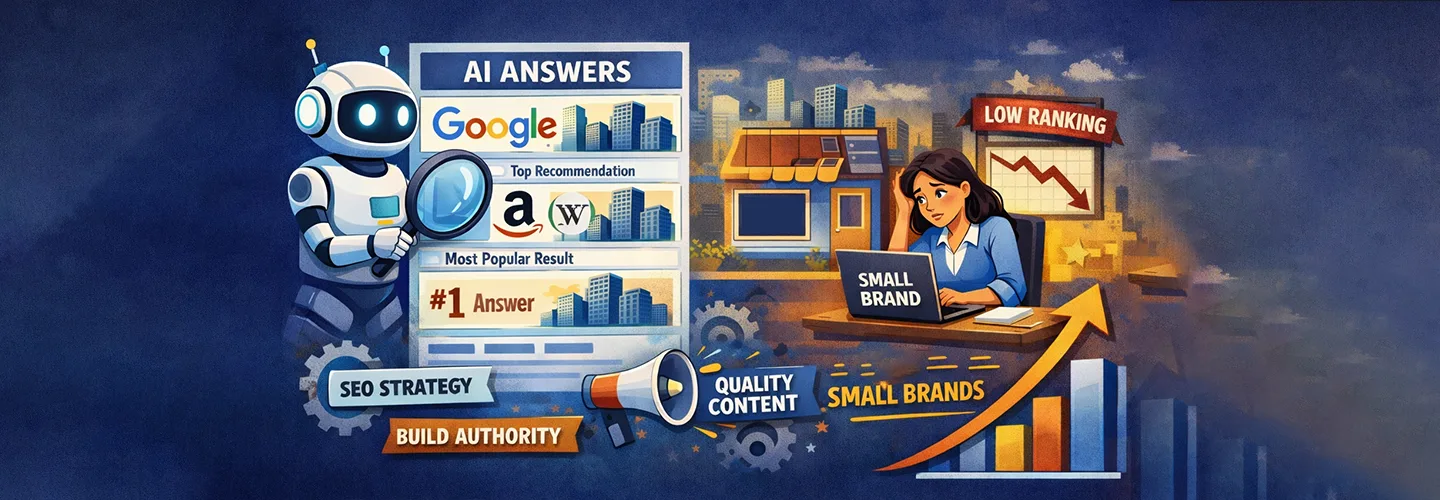
You have probably noticed it by now: ask ChatGPT or any AI tool a question, and you will see the same handful of websites cited over and over again.
For smaller companies, especially in SaaS, travel tech, or specialized software, this feels like being locked out before you even get a chance to compete. If your brand never appears in AI answers, you are invisible to potential customers before they even start their search.
Here’s the thing that makes this particularly frustrating: most people assume you need massive budgets, decades of backlinks, or household-name recognition to break through. But that’s not entirely true.
AI visibility works differently from traditional SEO. Smaller brands can absolutely compete, but only if they understand why AI keeps going back to the same sources, and what they can actually do about it.
The Reality: AI Really Does Play Favorites
What We are Seeing in the Data
Research analyzing 129,000 domains and more than 216,000 pages found that AI citation patterns are heavily influenced by strong authority and trust signals. Sites with large backlink profiles, high domain trust scores, and substantial traffic were cited far more often than smaller or less established domains, showing how narrow the slice of the web that AI systems reliably reference can be.
For most questions about business topics and general information, AI answers consistently cite:
- Major publishers and news sites
- Well-established SaaS brands
- Sites with extensive documentation
- Widely referenced industry resources
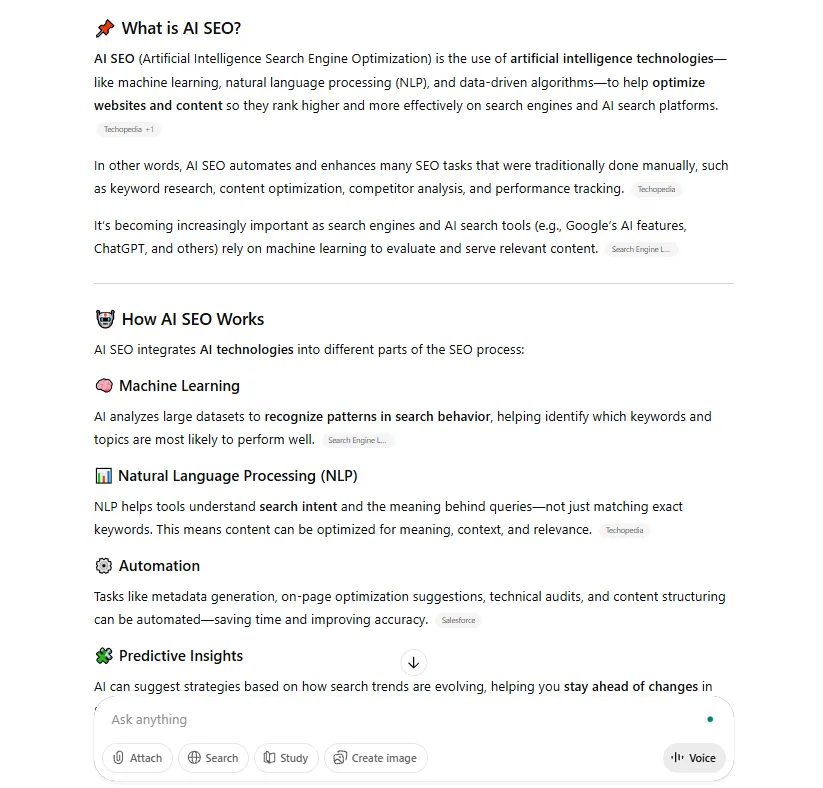
A simple search makes this pattern obvious. Foundational queries like “What is AI SEO” are dominated by the same established publishers, as shown in the screenshot attached. These sources aren’t wrong, but they become defaults because they are already trusted, widely cited, and deeply embedded in AI training and retrieval systems. For AI models, familiar authority is the safest option.
This isn’t just about traditional search rankings anymore. We are seeing a shift toward what some call “answer engine optimization“, focusing not just on where you rank, but on whether AI systems trust you enough to cite you.
What People Are Reporting
Talk to anyone doing SEO right now, and you will hear the same story. Even when their pages rank well in Google, AI tools still default to the usual suspects. It’s like AI chooses name recognition over actual relevance.
The common thread? AI visibility seems gated by how established you already are, not how useful your content actually is. And for smaller brands, that creates a steep uphill climb, unless you change your approach.
Why This Happens
There are three main reasons AI answers lean so heavily toward big-name sites:
Training data patterns: Larger, established websites appear more often in the data used to train AI models. This makes them feel more familiar and trustworthy to the AI.
Citation patterns: When AI systems look for sources in real time, they favor websites that already have strong linking and citation patterns from other sites.
Playing it safe: To avoid giving wrong information, AI systems choose sources that feel “safe”, even if those sources are generic or outdated.
Understanding this pattern is your first step to working around it.
We have seen this play out in real-world analysis, too. A recent discussion examining over 129,000 websites found that sites with 32,000+ links from other domains were several times more likely to get cited by ChatGPT than smaller sites, showing that established authority often wins over relevance.
What Actually Gets You Cited by ChatGPT? We Analyzed 129K Domains to Find Out
byu/Kseniia_Seranking inseogrowth
How Smaller Brands Can Actually Compete
Own a Narrow Topic Completely
Here’s where most smaller brands go wrong: they try to compete on broad, general topics.
That’s exactly where the big sites have you beat.
The real opportunity? Own narrow, specific topics that major publishers barely touch.
Instead of trying to rank for umbrella terms, focus on specific workflows, edge cases, or problems unique to your industry. AI systems struggle most with detailed, technical, or operational topics, and that’s where focused expertise wins.
How to do this well:
- Pick 3-5 highly specific topics within your area
- Create one comprehensive resource for each topic
- Answer every related question: how it works, common mistakes, costs, limitations
- Update your content every few months to keep it fresh
- Use clear formats like FAQs, comparison tables, and step-by-step guides
We have seen plenty of cases where smaller sites got their first AI citations from highly specific content that no major site bothered to create. In some instances, focused resources that explain one concept thoroughly can appear alongside much larger publishers, even without thousands of backlinks. This happens because AI systems reward clarity and depth when a topic is narrowly focused.
Create Original Data and Research
One of the strongest signals AI systems recognize? Being the source of information.
Rather than publishing another take on existing information, become a primary source by creating your own research. AI models, journalists, and other websites consistently prefer citing where a statistic or insight originated.
Practical ways to do this:
- Run annual or quarterly surveys in your industry
- Analyze patterns or trends from your own data
- Publish your findings openly (blog posts, PDFs, visual summaries)
- Make your data easy to reference with clear charts and quotable insights
Once other sites start citing your data, your authority grows. Over time, AI systems begin recognizing your website as a source worth returning to.
Participate in Communities Meaningfully
Places like Reddit aren’t just discussion forums; they are living knowledge bases that AI systems learn from.
AI increasingly pulls from public conversations where people explain concepts clearly and repeatedly. Brands that contribute consistently, without sounding promotional, build recognizable expertise.
Effective community participation means:
- Answering real questions in depth
- Sharing genuine experience, not marketing messages
- Only linking to your content when it genuinely helps
- Building a track record of helpful contributions
These discussions often get indexed and indirectly strengthen the trust signals around your brand and expertise.
Optimize for How AI Systems Read Content
Authority isn’t just about what you say; it’s about how clearly you structure it.
AI systems favor content that is:
- Well organized
- Internally consistent
- Easy to understand and connect to other information
Technical foundations that matter:
- Schema markup (Organization, Article, FAQPage, HowTo)
- Clear heading structure (H2s and H3s)
- Strong internal linking between related pages
- Fast loading and mobile-friendly experience
Content signals that help:
- More thorough coverage than competitors
- Regular updates
- Multiple formats (visuals, diagrams, clear explanations)
- Clear information about who wrote it and their expertise
When your content shows depth and structure, AI systems are more likely to trust it.

Use Strategic Partnerships
Smaller brands don’t need to be authorities everywhere, just in the right places.
Guest posts, co-marketing efforts, integration partnerships, and industry directories can all help transfer trust. A small number of placements on websites that AI already cites can dramatically increase how often AI systems encounter your brand.
The key is focusing on relevance, not volume.
Setting Realistic Expectations
Building authority for AI visibility takes time. Meaningful progress typically takes six to twelve months.
Early wins usually show up in specific, narrow queries first, then gradually expand. To measure success, look beyond just AI mentions and track:
- Growth in people searching for your brand name
- Quality backlinks from respected sites
- Featured snippets and top-position results
- Referral traffic from authoritative sources

Consistency matters more than any single tactic.
The Advantage Smaller Brands Actually Have
Smaller brands aren’t locked out of AI answers; they are just at a disadvantage if they play by the old rules.
Focus, agility, original research, and genuine community participation are advantages large organizations struggle to match. Every focused guide, original dataset, and helpful contribution builds over time.
AI authority isn’t built by being everywhere. It’s built by being exceptionally useful in the right places.
Before You Try to “Earn” AI Citations
Most teams assume their content isn’t appearing in AI answers because they need more backlinks, more pages, or more optimization.
In reality, the bigger issue is usually clarity.
AI systems don’t evaluate content as humans do. They test whether an explanation can stand alone, without surrounding context, supporting visuals, or follow-up clarification. When ideas are loosely defined, inconsistently explained, or scattered across multiple pages, AI systems hesitate to use them.
A practical review of AI visibility doesn’t start with tools or prompts. It starts by stress-testing your explanations:
- Can a single answer fully resolve what someone is looking for?
- Are similar questions answered the same way every time?
- Do key concepts remain clear when taken out of context?
- Where does vagueness prevent your content from being reused?
Understanding this often reveals why some content never gets selected, no matter how well it ranks.
If you want to assess how AI systems interpret your current content and what needs to be clarified, consolidated, or rewritten before you scale up, we have a short intake that helps surface those gaps.
Start here: https://tally.so/r/3EGEd4
FAQs
AI systems favor sources that have been historically consistent, widely referenced, and frequently validated by other trusted sites. Once a website becomes a “safe” source, it gets reused repeatedly to minimize the risk of incorrect or conflicting answers, even if newer or more detailed content exists elsewhere.
Yes, but only by narrowing your focus. Smaller brands are more likely to be cited when they provide the clearest and most complete explanation of a specific problem that larger sites only cover at a surface level. Precision reduces uncertainty, which increases reuse.
Reusable content resolves what someone is looking for in a single explanation, defines terms consistently, avoids internal contradictions, and is structured clearly. AI systems prioritize explanations that don’t require surrounding context, visuals, or follow-up clarification.
Broad guides introduce multiple interpretations and overlapping definitions. This vagueness makes AI systems cautious. Narrow, deeply focused content is easier to extract, cite, and trust, especially when it answers one question completely instead of many partially.
If AI answers summarize your topic without referencing your perspective, use generic language that doesn’t match your explanations, or rely solely on well-known publishers, it’s a sign your content lacks a clear ownership signal or consistent definition that AI systems can safely reuse.