You Optimized for Google, Not for Buyers

The Perfect SEO Score That Sells Nothing
You hit page one. Traffic is up. Dashboards look healthy.
But conversions? Flat.
That’s the uncomfortable moment most teams avoid: if the content is ranking, why isn’t it selling? And the harder question underneath it: who did you actually write this for, Google or a real human trying to solve a problem?
This article breaks down the growing gap between SEO metrics and real business outcomes.
Why content can technically “win” at SEO while failing at persuasion, trust, and conversion, and how to fix it without sacrificing rankings.
The Google-First Mindset: How We Got Here
What SEO Training Taught Us
For years, SEO education drilled in a familiar checklist:
- Target keyword in the H1, first 100 words, and URL
- Use keyword variations throughout the content
- Include LSI keywords
- Hit a target word count (1,500+, 2,000+, etc.)
- Optimize meta titles and descriptions
- Build internal links with keyword-rich anchor text
- Get backlinks with exact-match anchors
Do all this, and rankings will follow. The problem? The output often sounded like it was written for a crawler, not a customer.
This exact frustration shows up repeatedly in practitioner discussions. In one widely discussed Reddit thread, marketers describe how pages that rank well still fail to convert because they answer questions academically rather than helping readers decide what to do next. Several contributors point out that their content “looks perfect on paper” but lacks context, direction, or buyer relevance, resulting in traffic that never turns into action:
Why do some pages rank but never convert visitors?
byu/Real-Assist1833 inDigitalMarketing
The Optimization Process That Creates Robot Content
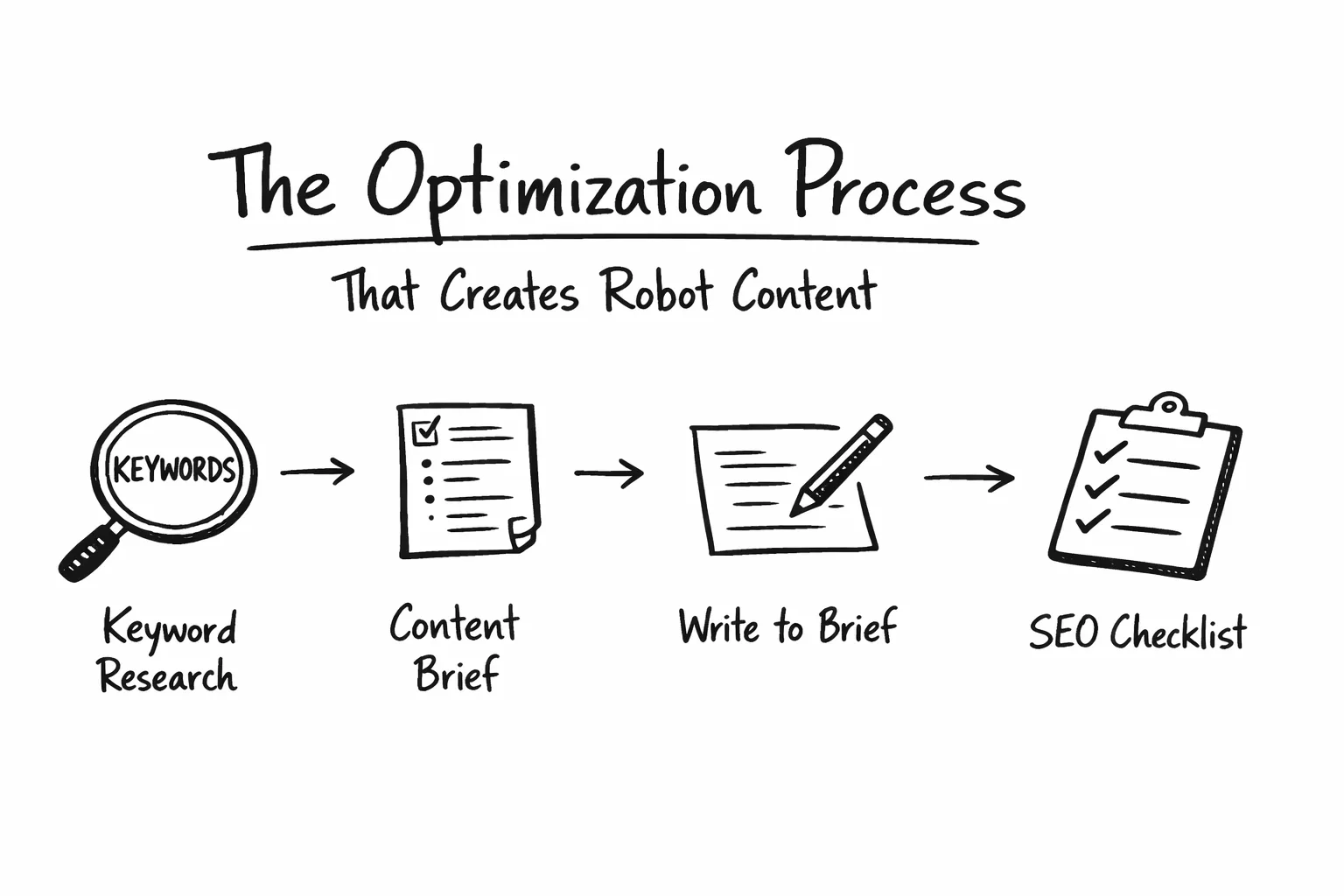
Step 1: Keyword research
You find high-volume, low-competition keywords. Decisions are driven by search metrics, not by what the searcher is actually trying to solve.
Step 2: Content brief
Instructions look like:
- “Include keyword X 15 times.”
- “Use this exact heading structure”
- “Minimum 2,000 words”
Step 3: Writing to the brief
The writer focuses on density, not clarity. Awkward phrasing sneaks in. Paragraphs get padded just to hit length. User needs are an afterthought.
Step 4: SEO review
- Keywords?- Yes
- Headings?- Yes
- Word count?- Yes
The one question never asked: Would this actually help someone make a decision?
The result is content like:
“When looking for email marketing best practices, understanding email marketing best practices is crucial. These email marketing best practices include…”
Technically optimized. Practically useless.
Why This Worked (Briefly), and Why It Doesn’t Now
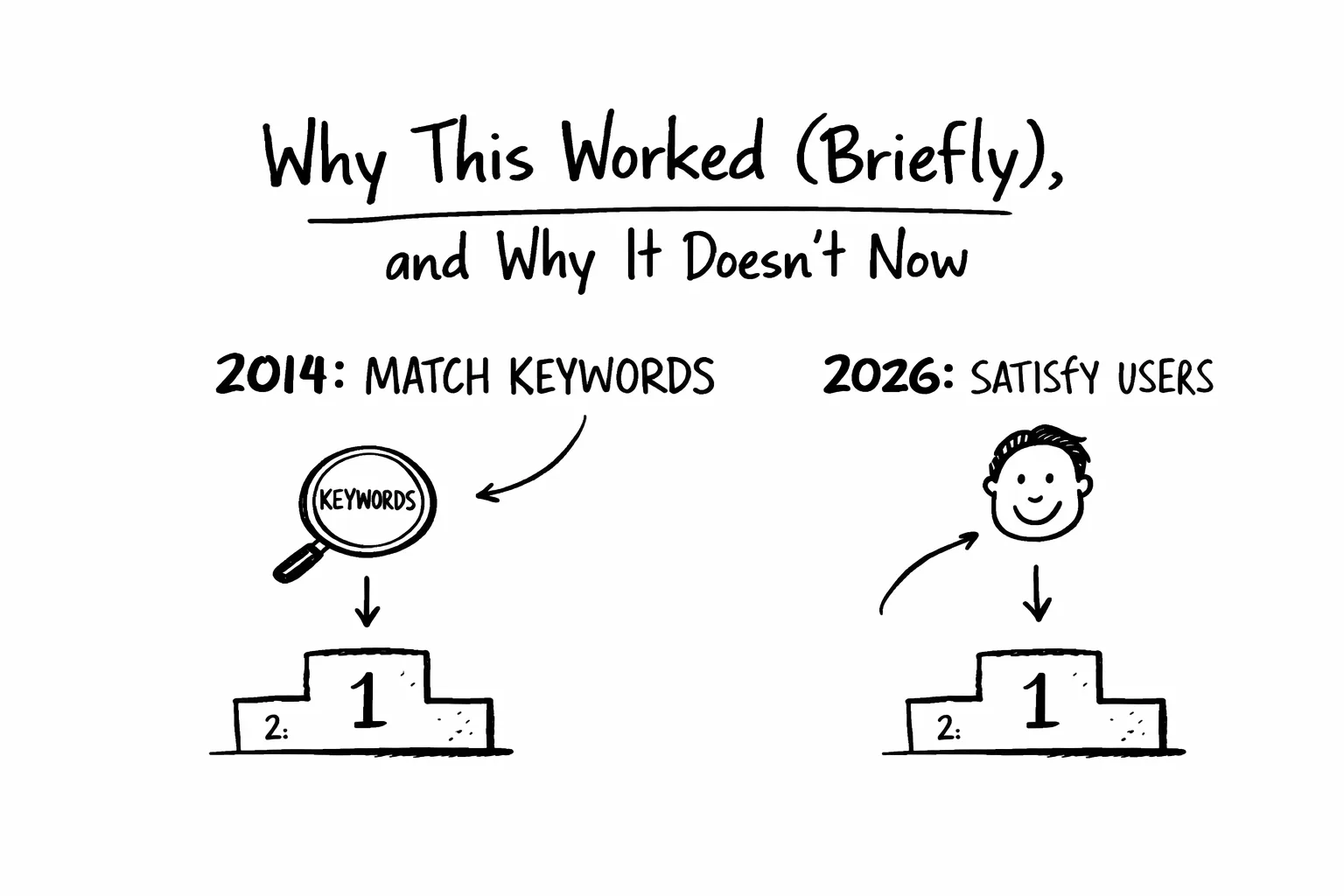
2010-2015: The Keyword-Matching Era
Google relied heavily on keyword signals. More matches meant better rankings. User experience mattered far less. Gaming the system worked.
2016-2020: Quality Updates
Panda, Penguin, and Hummingbird shifted the game. Google became better at understanding intent. Engagement signals started to matter. Keyword stuffing became a liability.
2021-2024: The Helpful Content Era
Google’s systems evolved to reward user satisfaction:
Natural language understanding
Behavioral signals (time on page, pogo-sticking)
Content written for people, not manipulation
Content that ranked but disappointed users began to decay over time.
2025: The Transition to AI-Mediated Search
In 2025, AI moved from an assistive feature to a primary interface. Search results increasingly included AI summaries, comparisons, and recommendations. Pages were no longer just ranked; they were interpreted.
Visibility started to depend on:
- Whether content could be summarized accurately
- Whether it answered real questions cleanly
- Whether it reduced confusion rather than added volume
Ranking still mattered, but influence began shifting away from clicks toward comprehension.
2026: The AI-Assisted Decision Era
By 2026, AI systems actively shape decisions. They explain options, compare trade-offs, and recommend next steps. Content competes inside AI-generated answers, not just search results.
AI-powered experiences now evaluate:
- Clarity over completeness
- Guidance over explanation
- Decision support over information volume
Content that fails to help users decide may still rank, but it loses influence. And influence, not position, is what now determines outcomes.
The reality is simple: if your content ranks but doesn’t satisfy users or assist decision-making, it won’t sustain visibility or impact for long.
This shift mirrors what many experienced SEOs discuss in practitioner threads, where rankings are no longer seen as success if users leave without clarity or confidence. Contributors note that Google may reward initial relevance, but sustained performance increasingly depends on whether content reflects real user intent, addresses doubts, and supports decision-making rather than just matching keywords:
Warning Signs You Optimized for Crawlers
Signal 1: Low Time on Page Despite Good Rankings
What the data looks like:
- Position #3 for the target keyword
- 8,500 monthly impressions
- 1,200 clicks (14% CTR)
- Average time on page: 47 seconds
- Bounce rate: 78%
- Conversions: 4
What this means: Your title won the click, but the content didn’t deliver the answer.
Signal 2: High Rankings, Zero Conversions
- Ranking- Yes
- Traffic- Yes
- Buyer movement- No
This happens when content answers the query technically but ignores emotional, financial, or operational concerns buyers actually have. This pattern often shows up alongside what we explain in Organic Traffic but No Conversions, where visibility masks deeper alignment issues.
Similar patterns appear in another discussion where marketers share screenshots of strong organic traffic paired with near-zero conversions, concluding that ranking pages often fail because they stop at explanation instead of helping readers evaluate options or take the next step:
When SEO traffic looks great, but conversions… not so much 😩
byu/BakerSalt7055 inDigitalMarketing
Signal 3: Visitors Leave to Find Better Answers
Users land, skim, then return to Google or jump to a competitor. That’s a clear signal your content wasn’t complete or convincing.
Signal 4: The Robot Test
Read your content out loud.
If it sounds like this:
“Email marketing strategies for small businesses require understanding email marketing best practices…”
You optimized for keywords, not humans.
Signal 5: No Clear Next Step
No CTA matches reader intent. No logical progression. The article simply… ends.
Because the goal was ranking, not guidance.
The Buyer-First Approach: What Actually Converts
Buyer Intent vs. Search Intent
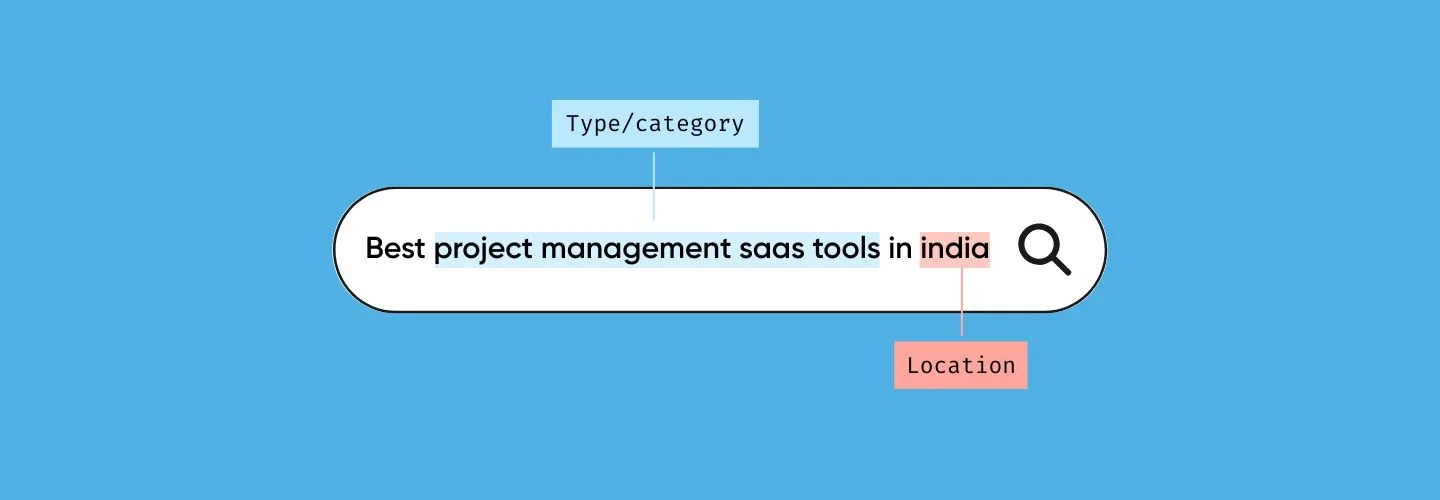
Search intent: “Email marketing best practices”- Informational
Buyer intent: “My email results suck, what do I fix, and should I do this myself or get help?”
SEO content answers the query literally. Buyer-first content solves the real problem underneath it.
Misalignment here often breaks the entire funnel, a dynamic we explore further in Your Funnel Is Backwards: The Search-to-Sale Alignment Model.
What Buyers Actually Need
- Context before tactics, why this matters, and what’s at stake
- Specific, actionable guidance, not theory
- Honest trade-offs, what works, what doesn’t, and why
- Clear next steps, what to do after reading
- Connection to outcomes, how this affects revenue, leads, or efficiency
How to Rewrite for Buyers (Not Crawlers)
Step 1: Start With the Real Question
Google‑first: “Email Marketing Best Practices 2026”
Buyer‑first: “Why Your Email Marketing Isn’t Working (And How to Fix It)”
The difference is pain‑led vs. keyword‑led.
Step 2: Use Natural Language
Write the first draft as if you are explaining it to a colleague. Add keywords after, only where they fit naturally.
Step 3: Always Answer “So What?”
Every tactic should explain impact:
- Why it matters
- What happens if you ignore it
- What result to expect
Step 4: Add Specificity
Replace generalities with examples, timelines, and numbers. Specifics build trust. Vague advice doesn’t.
Step 5: Structure for Human Scanning
Use question‑based headings, short answers, implementation steps, and common mistakes. Make it skimmable and deep.
Step 6: Add Relevant CTAs
Offer help when the reader is ready, not when you are impatient.
The Rewrite Framework
Phase 1: Audit for Robot Content
Score each page on:
- Natural language
- Actionability
- Business context
- Examples
- Clear next steps
Anything under 30/50 needs work.
Phase 2: Understand Real Intent
Use sales calls, support tickets, competitor comments, Reddit, and “People Also Ask” to understand what readers actually care about.
Phase 3: Rewrite for Humans First
Write the answer. Add structure. Add context. Optimize last.
Phase 4: Test and Measure
Watch engagement, not just rankings. Give Google 2-3 months to reassess quality.
Real Before‑and‑After Results
Buyer‑optimized rewrites consistently show:
- Higher time on page
- Lower bounce rates
- 2-3× conversion improvements
- Rankings that stabilize or improve
Because Google rewards content that people actually engage with.
The Dual Optimization Strategy
The insight: Optimizing for buyers is optimizing for Google.
Write for humans. Structure for clarity. Add SEO elements naturally. That’s how content ranks and converts.
Traffic Does Not Equal Trust or Conversions
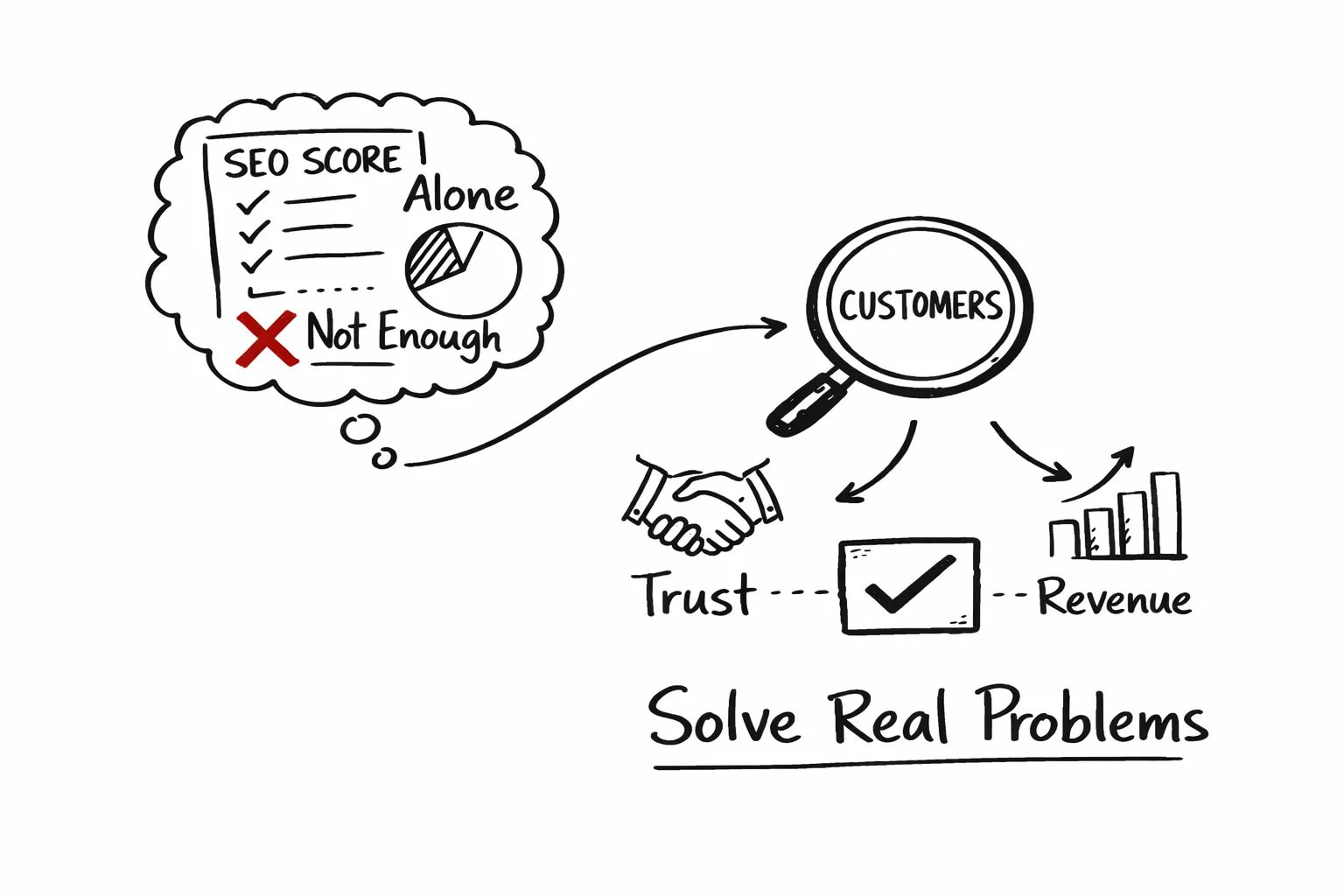
You didn’t start a business to rank on Google. You started it to grow revenue.
SEO is the vehicle, not the destination.
When you stop writing for crawlers and start writing for customers, something interesting happens: engagement improves, trust builds, conversions increase, and rankings follow.
Stop chasing SEO scores. Start solving real problems.
If This Feels Uncomfortably Familiar, You are Not Alone
If you are reading this and thinking, “This explains exactly why our traffic looks good, but nothing meaningful is happening,” you are not behind.
Most teams didn’t fail at content.
They just followed SEO rules that no longer align with how people make decisions.
Ranking pages is easy to measure.
Buyer trust is not.
The real question isn’t whether your content is “good” or “bad.”
It’s whether your highest-traffic pages are actually helping someone decide, understand, or move forward, or just helping Google index another article.
If you want a reality check on:
- Which of your pages are optimized for crawlers instead of buyers
- Where people are dropping off mentally, not just analytically
- What’s realistically worth rewriting (and what isn’t)
You can share a bit of context with us here: https://tally.so/r/3EGEd4
No content audits.
No SEO scorecards.
No pressure to rewrite everything.
Just a short form to understand what you are publishing, what it’s meant to do, and whether a buyer-first rewrite would materially change outcomes.
FAQs
Look at engagement, not rankings. Pages that rank well but have low time on page, high bounce rates, and near-zero conversions are usually written to satisfy algorithms, not people. Reading the content out loud often reveals the problem immediately.
Yes, and often better long-term. Google’s systems increasingly reward content that satisfies users. Pages rewritten for clarity, specificity, and usefulness frequently maintain or improve rankings because engagement signals improve.
Keyword density is an outdated metric. What matters now is topical depth, natural language, and how well the content answers real questions. Most buyer-first rewrites still include keywords, just without forcing them.
Trying to “SEO-optimize” the rewrite too early. The most effective process is to write the answer first, clearly and naturally, then lightly optimize once the content actually helps someone.
No. Start with high-traffic, low-conversion pages. These have the biggest upside and the clearest signals. Not every page needs to convert, but every page should help.
Engagement improvements usually appear within weeks. Conversion improvements often follow shortly after. Ranking stability typically settles within 2-3 months as Google re-evaluates the page based on user behavior.
Both. In fact, many landing pages are worse offenders than blogs, keyword-heavy, vague, and disconnected from real buyer concerns. Buyer-first thinking applies even more strongly there.
Read your top-performing page out loud. If it doesn’t sound like something you would say to a real customer, it’s optimized for the wrong audience.