Why Most Content Refreshes Fail (and What Actually Works)
The Update That Changed Nothing
You spent hours updating old blog posts.
You changed the publish date.
You added a few new sections.
You fixed broken links and refreshed images.
And then nothing happened. Your rankings stayed exactly where they were. In some cases, they even dropped.
This isn’t because Google “hasn’t noticed yet.” It’s not bad luck either.
The real reason is simple: most content refreshes do not fix the actual reason a page stopped ranking.
This article explains why updating old content usually fails, what is really happening behind the scenes, and the approach that actually works when rankings refuse to move.
The Wrong Way to Refresh Content (That Most People Follow)
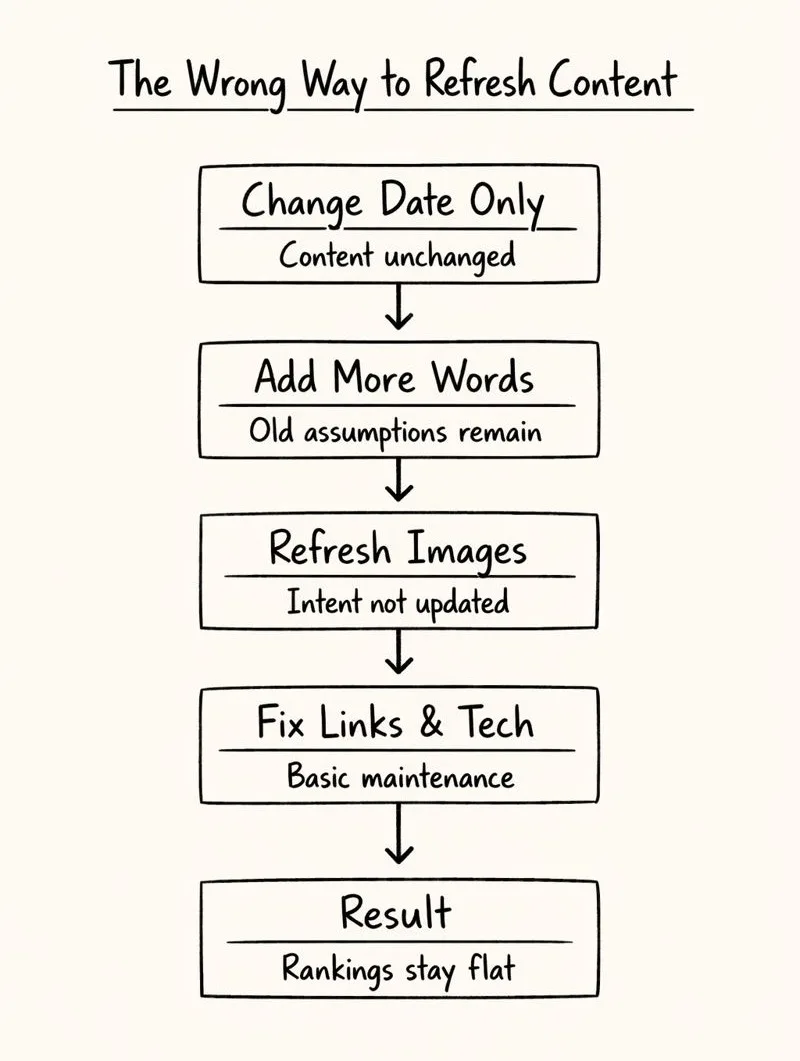
Most content updates fail because they focus on easy changes instead of meaningful ones. They change how the content looks, not what it actually solves.
Just Changing the Date
What you did:
- Replaced “2023” with “2026” in the title.
- Updated the publish date in your CMS.
- Left the rest mostly unchanged.
Why it failed:
Google easily recognizes surface-level updates. Examples, screenshots, tools, and data are still outdated. Readers do not stay longer or engage more. No real value was added.
Changing the date makes content look current to humans, not to search engines.
Adding More Words Without Fixing the Core
What you did:
- Turned a 1,200-word article into 1,800 words.
- Added a few new sections.
- Did not remove or rewrite outdated parts.
Why it failed:
The original content is still based on old assumptions. New sections do not match what people are searching for today. Length alone does not improve rankings; relevance does.
In a recent Reddit thread, an SEO pro shared that they updated multiple pages, fixed meta tags, and added content, yet rankings stayed stuck. Without authority signals and proper keyword intent match, simple updates aren’t enough.
Why is My SEO Not Improving Even After Updating Content?
byu/Real-Assist1833 inSEO_Digital_Marketing
Refreshing Images and Design Only
What you did:
- Added a new featured image.
- Updated visuals or graphics.
- Improved the overall look of the page.
Why it failed:
Visual changes do not fix content relevance. The article still does not match the current search intent. Rankings rarely change from design updates alone.
Fixing Broken Links and Technical Issues
What you did:
- Replaced dead links.
- Updated outdated URLs.
- Cleaned up technical errors.
Why it failed:
This is basic maintenance, not optimization. It does not change what question the page answers or improve depth. It keeps things stable but does not push rankings higher.
The Common Pattern
All of these updates change the content on the surface without understanding why the page stopped ranking. That is the real issue.
This gap between effort and outcomes isn’t new; it’s just more visible now. Across dozens of real-world SEO failures, the most common issue wasn’t a lack of work, but working on the wrong things. Teams kept optimizing pages, tracking metrics, and publishing content without addressing the deeper reasons search visibility stalls. This pattern shows up clearly in an analysis of repeated mistakes across failed SEO projects.
Why Pages Stop Ranking in the First Place
Pages do not lose rankings randomly. There are clear reasons why this happens.
This confusion isn’t just SEO theory; it shows up in real-world practice, too. One recent Reddit thread described how, despite months of SEO effort and technical fixes, clicks and organic performance stayed flat, even with “everything done right.” It highlights that updates alone don’t always solve complex ranking dynamics like competition shifts or algorithm changes.
6 Months of Hard SEO Work, Zero Growth. I'm Feeling Defeated
byu/Design_Inspire_1354 inSEO
Search Intent Changed
What happened:
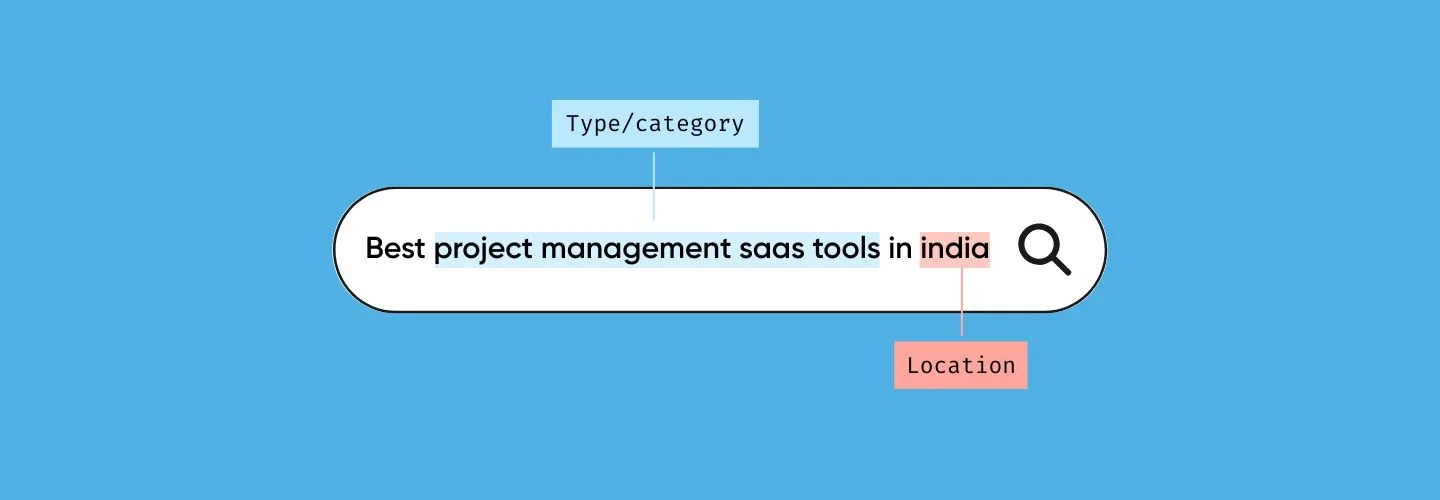
In 2022, someone searching for “email marketing best practices” wanted general advice.
A simple list of tips worked well.
In 2026, the same search means something very different.
People now expect guidance on AI tools, privacy rules, deliverability issues, and platform changes.
If your content still answers the 2022 version of the question, updating the date will not help. The content is still solving the wrong problem.
The search term stayed the same. The meaning behind it changed.
The Topic Lost Demand
Some topics simply stop being relevant.
A guide that once received thousands of searches can drop to almost zero if the platform or trend disappears. No update can revive a topic people no longer search for.
You can identify this by checking keyword trends in tools like Ahrefs, Semrush, or Google Keyword Planner. If demand has dropped drastically, it may be time to redirect, rewrite for a modern equivalent, or delete the page entirely.
What makes this more concerning is how common content failure already is, even before AI enters the picture. A large portion of SEO content never earns meaningful visibility at all, not because it’s poorly written, but because it’s created without a clear reason to rank or be cited. This breakdown of why most SEO content gets zero traffic explains why visibility problems compound over time.
Competitors Raised the Standard
What ranked well five years ago is often not enough today.
Competitors may have published longer, deeper, more practical content.
They may include tools, videos, templates, data, and real examples.
Adding a few paragraphs to your old article does not close that gap. Rankings are relative. You are not competing with your past version. You are competing with what currently ranks.
You Were Never Truly Competitive
Sometimes the issue is not the content at all. It is an authority.
If the top results are dominated by well-established brands and your site has much lower authority, refreshing the content will not magically fix that gap.
In these cases, the better strategy is to target more realistic keywords, focus on long-tail topics, or build authority before competing for high-difficulty terms.
The Content Should Not Exist Anymore
Some content cannot be saved.
Thin articles with no unique value, duplicate pages, outdated announcements, or topics you no longer support are better removed than refreshed.
Updating these pages wastes time and can hurt overall site quality.
The Content Refresh Framework That Actually Works
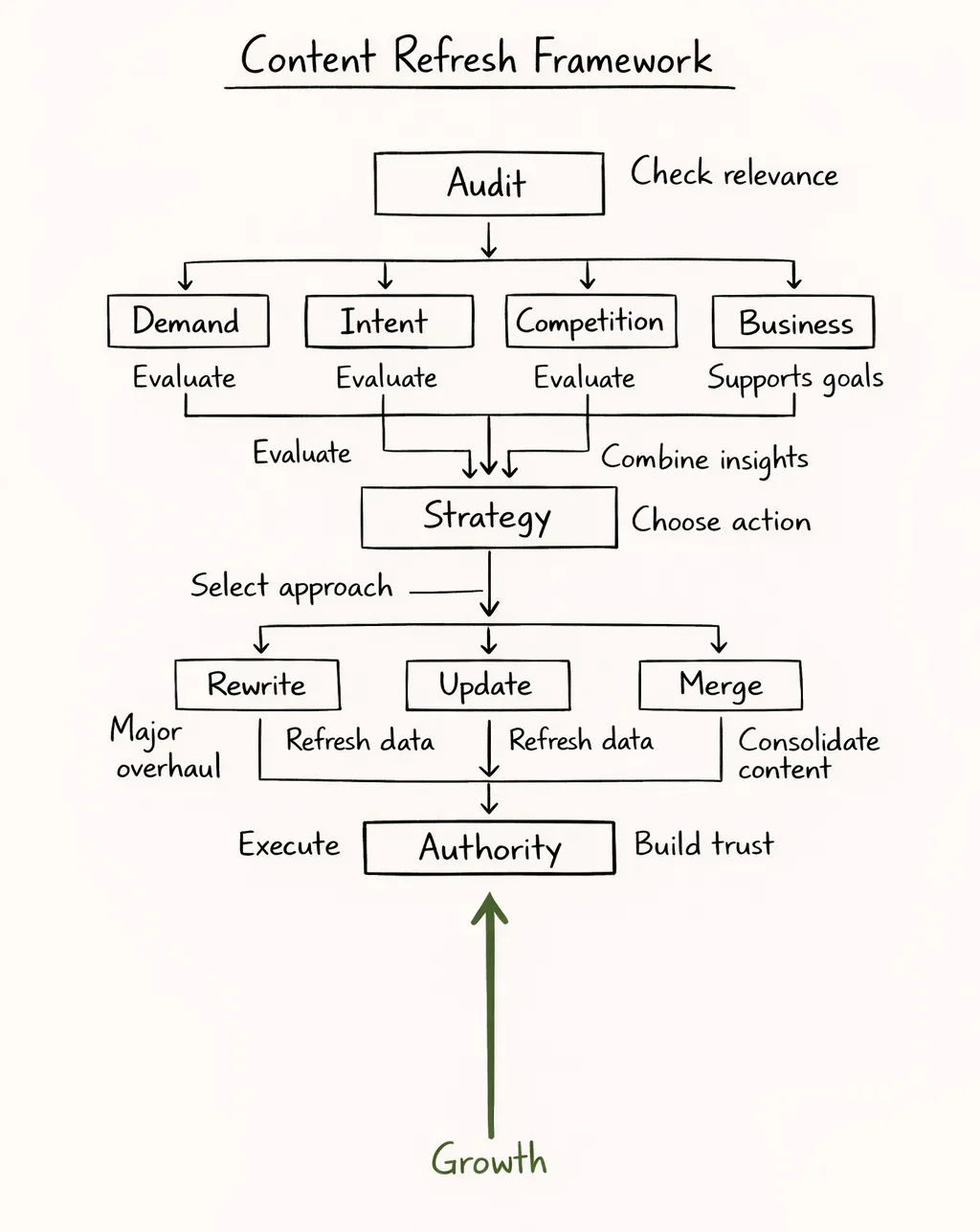
Step 1: Audit Before You Update
- Does the topic still have search demand?
- Does the content align with the current intent?
- Can you realistically compete against existing results?
- Does it support your business objectives?
If the answer is “no,” remove, redirect, or rewrite.
Step 2: Choose the Right Strategy
- Full rewrite: intent shifted significantly.
- Major update: large portions need fresh data, examples, or depth.
- Minor update: only tweak examples or stats.
- Merge pages: consolidate weak posts into a strong one.
Step 3: Update With Intent in Mind
- Study current top-ranking pages.
- Identify content gaps and unanswered questions.
- Add clarity, examples, and actionable advice.
- Keep your formatting scannable with headings, short paragraphs, and lists.
Step 4: Support With Authority
- Internal linking, backlinks, and promotion amplify the refresh.
- Engagement signals (time on page, scroll depth, shares) matter.
Updating Content With Intent in Mind
When doing a major update or rewrite, start by studying what currently ranks.
Look at how competitors structure their content.
Notice what they include and what they leave out.
Pay attention to usability, formatting, and clarity.
Then identify gaps.
What are they not explaining well?
What questions are still unanswered?
What experience or insight can you add that they cannot?
Your goal is not to copy what exists. It is to create something clearly better.
What Actually Improves Rankings
Matching current search intent is the biggest factor.
Your content must answer what the query means today, not what it meant years ago.
Adding unique value matters more than freshness.
Original data, frameworks, tools, or real-world experience make content stand out.
Depth also matters.
Moving from surface-level tips to detailed, practical guidance often makes the biggest difference.
User experience plays a major role.
Clear structure, short paragraphs, tables of contents, visuals, and mobile-friendly layouts improve engagement, which supports rankings.
Finally, refreshed content performs better when supported by fresh authority signals such as internal links, new backlinks, and promotion.
Common Mistakes That Kill Content Refreshes
- Updating too many pages at once often leads to rushed, low-quality changes.
- Keeping outdated sections makes content feel old even after updates.
- Ignoring current competitors results in missing critical elements.
- Adding more content without improving readability hurts engagement.
- Failing to track results makes it impossible to learn what works.
A slow, focused, measured approach always performs better.
Key Takeaways
- Changing dates isn’t updating
- Search intent evolves
- Always analyze the current top 10
- Content must meet modern standards
- Some content should be deleted
- 30%+ meaningful change is required for Google to recognize updates.
- Unique value beats freshness
- UX impacts rankings
- Track results
- Update strategically, not emotionally
If Content Refreshes Keep Failing, You are Not Doing Anything “Wrong”
If you are reading this and thinking, “We have updated posts multiple times, and nothing moves,” you are not alone.
Most teams aren’t bad at content updates. They are just updating without clarity on why a page stopped ranking. Dates get changed. Paragraphs get added. Images get refreshed. But intent mismatches, authority gaps, and competitive shifts remain untouched.
If you want a clear view on which old posts are actually worth updating, which ones should be rewritten, merged, or removed, and how much effort makes sense for your site, you can share a bit of context here: https://tally.so/r/3EGEd4.
No audits. No content pitches. No generic SEO advice. Just a short form to understand your site, your content, and what updates can actually improve rankings.
If there’s a clear path forward, we will tell you. If not, you will still leave with more clarity than before.
Common Questions About Refreshing Old Content
Because rankings don’t drop due to age alone. They drop when search intent changes, competitors improve, or the content was never competitive. Updating without addressing those reasons rarely works.
In most cases, at least 30 percent of the page needs meaningful changes. That means rewritten sections, updated examples, new depth, and removed outdated content. Minor edits usually don’t count.
It depends on how much the topic and intent have changed. If the core idea is still valid, a major update can work. If the intent has shifted significantly, a full rewrite is usually necessary.
Check current search volume and trends. If demand has dropped sharply or the topic is no longer relevant to your audience or product, updating it may not be worth the effort.
Yes. Well-written content can still fail if competitors offer deeper resources, if your site lacks authority for that keyword, or if the page doesn’t match what users expect today.
Sometimes, yes. Thin, duplicate, outdated, or irrelevant content can hurt overall site quality. Deleting or consolidating weak pages often helps stronger pages perform better.
Typically 6 to 12 weeks. Rankings don’t move instantly, especially for competitive keywords. Trends over time matter more than short-term fluctuations.
No. It’s important maintenance, but it won’t move rankings by itself. These changes should support a deeper content improvement, not replace it.
Because not all pages fail for the same reason. Pages that improve usually align with current search intent, add unique value, and compete realistically within the site’s authority level.
Treating refreshes as cosmetic updates instead of strategic decisions. Without understanding intent, competition, and authority, even frequent updates won’t lead to better rankings.