SEO for a New Product: How to Get Found With Keywords, Pages and Content
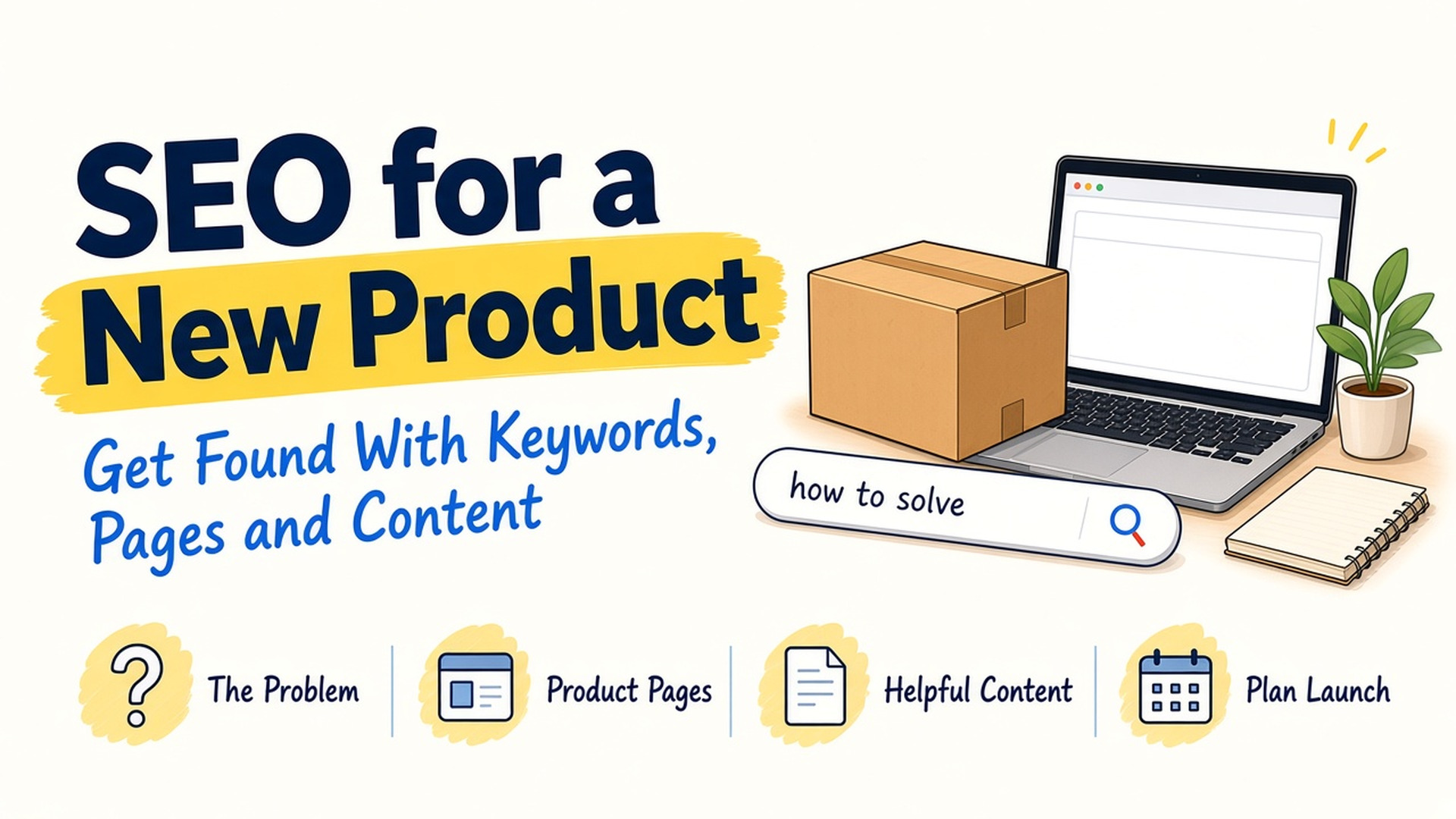
You have a new product and a launch date. Nobody has heard of it, and nobody is searching for its name. That is the real SEO problem with a new product, and it is why the approach is different from optimising an established brand.
This post is for founders and marketers launching a product or a new product line. We’ll walk through how to use SEO to get found, from keywords to product pages to content, in the order we would do it.
Why SEO matters for a new product, and what to expect
SEO helps people who are already looking for something like your product find you. A page that ranks well sends visitors who have chosen to look, and being found there builds credibility. But be realistic: a new page takes time to be indexed and to earn trust, so SEO is slower than ads. Plan for months, and run it alongside other channels in the meantime.
The most important idea is this: people do not search for your product’s name yet. They search for the problem it solves. Your SEO should start there.
Step 1: Find the words people use for the problem
- List the problems your product solves, in the words a customer would use, not your internal names.
- Look at how people search for them. Type your ideas into Google and note the suggestions and the “People also ask” questions. Tools such as Google Keyword Planner, Ahrefs or Semrush show search interest and difficulty.
- Study competitors. See which phrases and pages they rank for, and look for gaps they have missed.
- Prefer specific phrases. Longer, more specific searches have less competition and a clearer intent. Our post on short versus long keywords explains why they suit new products.
- Use the phrases naturally. Write for people first.
Step 2: Build product pages that are easy to understand
A product page does two jobs: it tells a search engine what the page is about, and it helps a visitor decide.
- Title and description. Say clearly what the product is and who it is for, in plain words, with the main phrase near the start.
- Headings. Use a clear main heading and subheadings that answer the questions buyers have.
- Meta title and description. Write them for the searcher: accurate, specific and inviting.
- Images. Compress them so the page loads quickly, and give each one a descriptive alt text that says what it shows.
- Detail. Add the information people look for, such as price or a starting price, key features, who it is for and how to get started.
- Structured data. Product markup can help search engines understand your page. Your SEO plugin or platform may add it for you.
Match each page to what the searcher wants. Our guide to content for user intent shows how.
Step 3: Create content around the product
A product page alone is rarely enough. Content answers the questions that come before a purchase and shows you understand your customer.
- Plan before you write. Decide who the content is for, what you want it to achieve, which formats you will use and where you will share it.
- Answer the problem-led questions you found in step 1: how to solve it, what to look for, and how options compare.
- Write helpful, honest comparisons and guides.
- Use customer proof. Reviews, testimonials and real stories add credibility. Ask customers for permission before you share them.
- Link your pages together. Link from guides to the product page and between related articles, so search engines and readers can follow the path.
Step 4: Plan it around the launch
- Before launch: research keywords, build the product page and a few supporting articles, and set up Google Search Console so you can see what is working.
- At launch: publish, submit the pages in Search Console, and tell people through your other channels.
- After launch: watch which searches bring visitors, update pages with what customers actually ask, and add content for the phrases that show promise.
Common mistakes
- Optimising for the product name only. No one searches for it yet.
- Copying the competitor’s page. You will look the same, with no reason to be chosen.
- Stuffing keywords. Pages written for robots read badly and do not convert.
- Expecting overnight results. A new page takes time to earn trust.
- Forgetting the visitor. Rankings mean nothing if the page does not help people decide.
A new product has no search demand under its own name, so SEO starts with the problem it solves.
Find the phrases people use, build clear product pages, and add content that answers their questions.
Use customer proof, link your pages together, and plan work before, at and after launch.
Expect months, not days, and run other channels alongside.
FAQs
How long does SEO take for a new product?
Usually months. New pages need to be found, indexed and trusted before they rank, so plan other channels for the early weeks.
What should I optimise first for a new product?
Start with the problem your product solves and the phrases your customers use for it, then build a clear product page and a few helpful supporting articles.
Do I need a blog to do SEO for a new product?
Not always, but helpful content that answers customer questions gives you more ways to be found than a single product page can.
Which tools should I use for keyword research?
Google Keyword Planner is free. Ahrefs and Semrush give more detail. Start with Google’s own suggestions and the “People also ask” questions before you pay for anything.
Launching a new product and want it found?
Tell us about your product. We will tell you honestly which searches are worth targeting first and what to build before launch day.
Prefer WhatsApp or a call? +91 99131 53530. The first conversation costs nothing.