SGE vs.Traditional SEO: Advanced Strategies for SaaS Marketers in 2026

SGE is reshaping how SaaS companies earn visibility, not replacing SEO, but redefining it. The fastest-growing SaaS brands in 2026 win by optimising for both: discoverability inside AI-generated answers and authority across traditional rankings.
This guide breaks down the exact strategies SaaS marketers must adopt to stay visible, capture demand, and drive form-fill conversions.
Context: What SaaS Teams Usually Miss

They chase keywords, add more blogs, and hope for traffic, while SGE pulls answers directly into AI results, shrinking clicks and prioritising structured, authoritative content.
We have seen this shift echoed by founders and marketers on Reddit. One thread on r/SaaS captured it sharply: “You know that ‘#1 on Google’ doesn’t mean what it used to. We started focusing on GEO (Generative Engine Optimisation). It’s not about backlinks or CTR, it’s about showing up in answers.”
SEO is shifting and most SaaS teams are behind. Here’s what we’re doing instead.
byu/Fantastic-Control-87 inSaaS
That’s the new reality: many of the clicks you used to depend on may vanish, unless your content is built for AI-first visibility.
What Most Teams Get Wrong
- Believing SGE = “SEO vs AI”, when it’s actually “SEO + AI visibility.”
- Focusing on content volume over content intent and structure.
- Ignoring the rising importance of being cited inside AI answers instead of just ranking.
- Using 2022 playbooks for 2026 search behaviour.
If your approach hasn’t changed, you are already behind.
Core Insight: The Dual-Channel Search Optimisation Model for SaaS (2026)
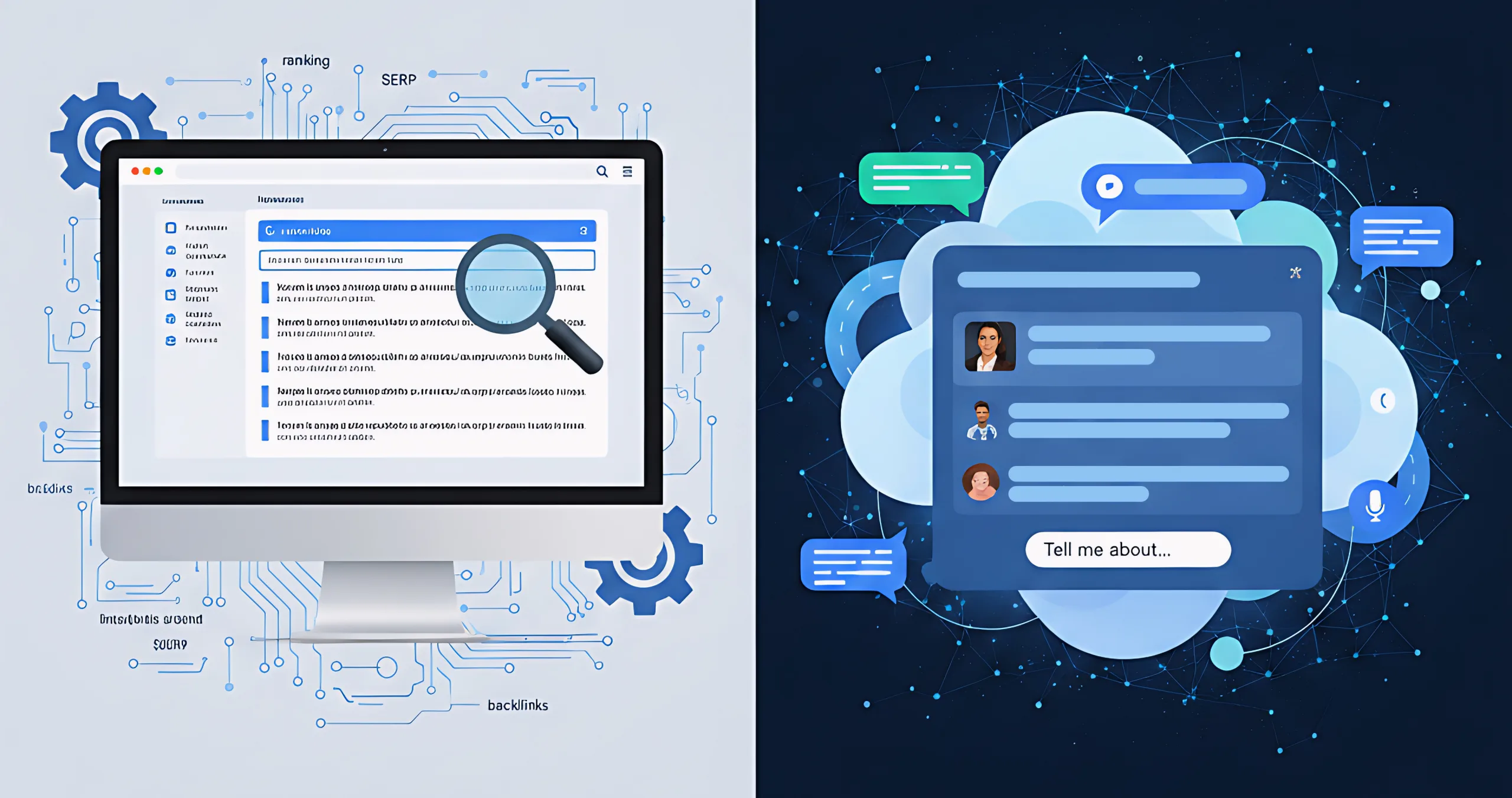
To grow under SGE, SaaS teams must optimise across two visibility layers and treat them as complementary, not competing.
1. SGE Layer (AI Answer Optimisation)
Goal: Earn placements inside AI-generated summaries or answer-engine outputs.
You win this layer by:
- Providing concise, structured explanations (not overly long essays).
- Writing content in a question-driven format.
- Adding entity-rich sections: clear definitions, frameworks, and contextual terms.
- Publishing expert POVs (founder or team quotes) for credibility.
- Using schema markup (FAQ, HowTo, Product, Organisation) to help AI parse and trust your content.
This layer helps AI understand → trust → cite you.
If you want a complete roadmap, here’s a deeper breakdown of how to get your brand visible in LLM results.
2. Traditional SEO Layer (Organic Ranking Optimisation)
Goal: Maintain stable ranking positions, domain authority, and backlink strength.
You win this by:
- Building in-depth topical clusters around your core themes.
- Creating linkable assets: long-form guides, comparison pages, templates, case studies.
- Supporting content richness to satisfy EEAT (Experience, Expertise, Authority, Trust) signals.
- Maintaining internal linking, technical SEO, performance, and on-page optimisation.
When both layers work together, you get reach across AI-driven discovery + organic search + conversions, that’s the growth engine for 2026.
SGE vs. Traditional SEO, What Changes for SaaS (2026)
| Factor | SGE (AI Overviews) | Traditional SEO (SERP Listings) |
|---|---|---|
| Visibility Mechanism | AI answers/summaries / zero-click results | Ranking in search results |
| Content Type Needed | Short, structured, answer-first, entity-aware | Long-form, authoritative, deep-content |
| Conversion Opportunity | Lower click-through rate, but high-intent clicks and form fills | Higher CTR, but mixed intent |
| What Signals Work | Clarity, structured data, trust, named expertise | Backlinks, domain authority, and content depth |
| Best Format for SaaS | Q&A, short explainers, frameworks, data blocks | Guides, comparisons, long-form resources |
Examples: How Top SaaS Brands Might Win with SGE
Example 1, “Best enterprise CRM for SMBs”
A page structured with:
- a clear definition
- price tiers
- comparison table
- founder or expert quote
- clean schema
…is more likely to appear inside AI answers, not just in SERPs.
Example 2: “How does workflow automation reduce operational costs?”
A content piece with:
- step-by-step benefits
- ROI data
- structured bullets
- real case-study numbers
…is prime material for AI-powered inclusion.
The clearer the content → the more likely it gets cited.
Final Take: Get Your SaaS Brand Ready for AI-First Search
SGE isn’t guesswork; it’s structure, clarity, and intent alignment. If your SaaS brand wants to stay visible in 2026, you need content that answers cleanly, entities that AI can verify, and pages that show real expertise.
At Thrillax, we look at how your topics are built, how your content signals authority, and which gaps keep you from showing up in both AI overviews and traditional results.
If you are serious about growing organic demand in the AI-led search landscape, begin by understanding your current visibility gaps.
Why This Matters Now:
- AI search demands structured clarity, not long-form clutter
- SGE rewards brands with precise, high-signal answers
- Traditional SEO still drives authority, but only when aligned with AI needs
- Most SaaS teams don’t realise which part of their content stack is holding them back
Your data, your pages, your signals, your frameworks, decide whether SGE includes you or ignores you.
Fixing them isn’t guesswork.
It’s a process.
If you are ready to understand where your SaaS brand stands in SGE and traditional search, and what needs to improve, start by sharing your visibility challenges here: https://tally.so/r/3EGEd4.
FAQs
Because SEO rankings don’t guarantee entity resolution. LLMs cross-check:
- schema accuracy
- brand-to-founder linkage
- third-party mentions
- directory consistency
- conflict-free metadata
If your signals contradict each other across the web, LLMs suppress you even if your SEO is excellent.
They triangulate data across:
- structured schema
- Wikipedia/Wikidata-like sources
- high-authority directories
- cross-site NAP consistency
- trusted third-party references
- long-standing crawl history
LLMs don’t trust a brand unless multiple independent, structured sources say the same thing.
Three main delays:
- Crawl latency – AI models don’t fetch updates in real-time.
- Model refresh cycles – Some models update weekly, others monthly.
- Conflicting old data – Outdated listings confuse entity resolution.
If your old info exists elsewhere, LLMs continue referencing it until enough proofs update.
Yes. If even one trusted website presents conflicting data (e.g., different founder name, old product description, old HQ), LLMs downgrade or entirely ignore the brand to avoid producing incorrect answers.
Yes, often more than backlinks. LLMs evaluate semantic proximity, not just hyperlinks.
If multiple niche sites mention your brand consistently (even without links), it helps entity confidence.
Yes, because directories provide:
- verified metadata
- structured fields
- cross-brand comparisons
This format is extremely LLM-friendly.
Directories often act as the “cross-check layer” LLMs rely on.
Lack of external validation.
LLMs do not trust schema alone; it’s self-reported.
They need independent verification from:
- press
- communities
- docs
- product listings
- external profiles
Schema ≠ trust.
Schema + external citations = visibility.
Look for 3 signals:
- Your brand appears when queried with your niche.
- Your founder’s name surfaces linked to your product.
- LLMs can summarise your features without hallucination.
If answers are missing or inconsistent, your entity signals are incomplete.
Partially, but they prioritise:
- structured content
- predictable data formats
- public, indexable content
- APIs (docs, GitHub repos)
- high-authority citations
They don’t use PageRank-style scoring; they use evidence graphs.
It means:
- They have stronger external proof
- They have cleaner entity definitions
- They have more public-facing documentation
- Their data is easier to verify
Fix your layers, and you can leapfrog them even without higher traffic or SEO dominance.