Is Social Media Marketing Worth It for a B2B or SaaS Business? A Simple Way to Decide
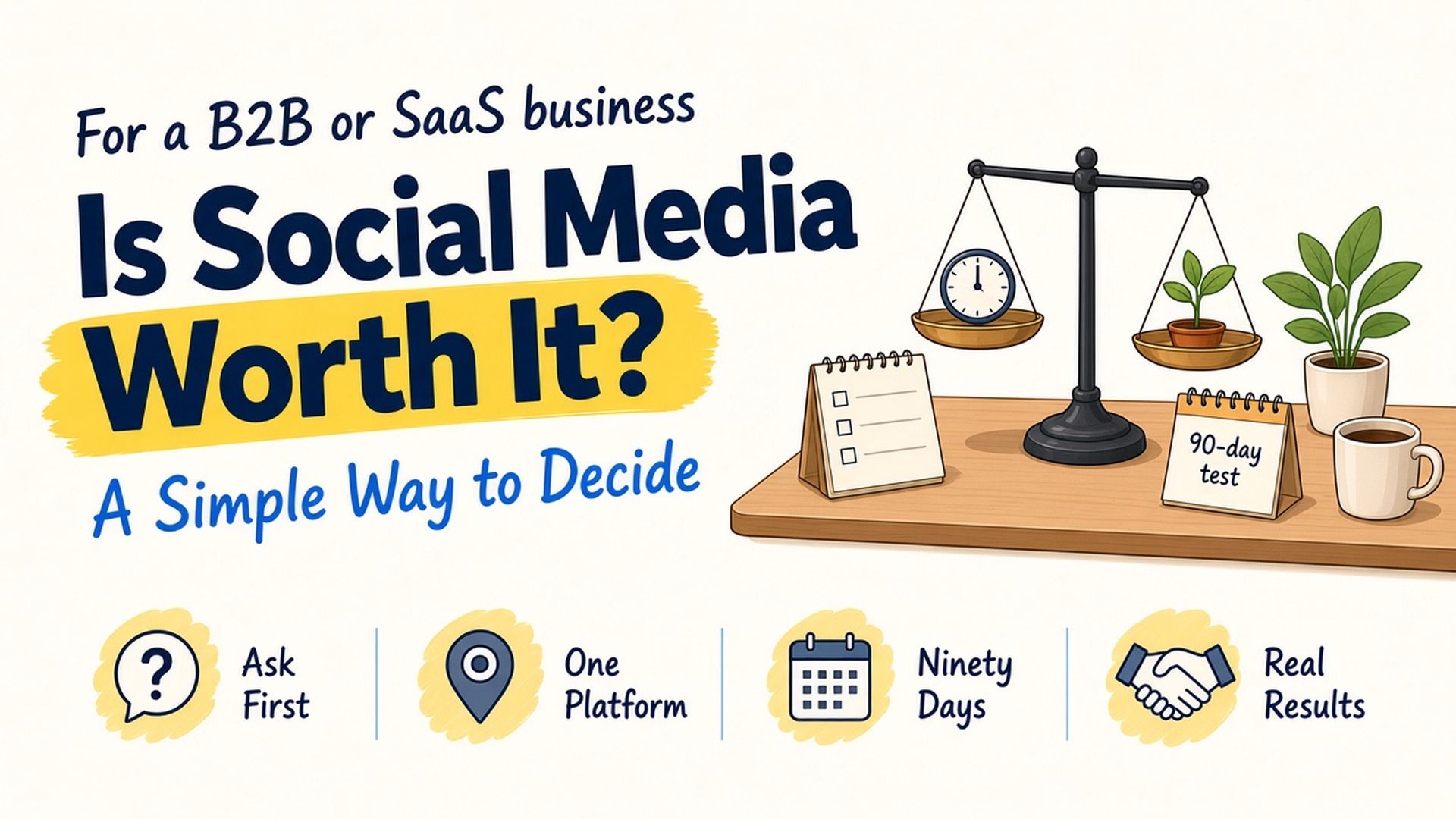
Is social media marketing a good investment for a SaaS or B2B business, or just a way to keep busy? The honest answer is that it depends on your goals, your buyers and the time you can give it. This post gives you a simple way to decide before you spend anything.
It is for founders and marketing leads at software and B2B companies who keep hearing that they “should be on social” and want to know whether it will pay off.
What investing in social media marketing really means
Social media marketing is using platforms such as LinkedIn, Instagram, Facebook, X and sometimes Pinterest to build awareness, start conversations with potential customers and bring people to your business. It can be organic, which costs mostly time, or paid, which costs money as well. For most B2B businesses, the real investment is not the platform fee. It is consistent, thoughtful effort over months.
Five benefits, and the honest catch for each
- It is affordable to start. You can begin for free. The catch is that “free” means time, and posting without a plan wastes it.
- It shows what makes you different. You can show your people, your thinking and how you solve problems. The catch is that it only works if what you share is genuine and specific to you.
- It helps you find new customers. You can reach people in your field through content and targeted ads. The catch is that B2B buyers rarely buy straight from a post. Social usually starts a relationship that other channels finish.
- It builds social proof. Reviews, customer stories and real results shared in public make a stranger trust you faster. The catch is that you need real stories to share, and permission to share them.
- It strengthens customer relationships. Fast, helpful replies on social show you care. The catch is that someone has to watch the channels and answer promptly.
Is it right for your business? Four questions
Ask yourself these before you commit:
- What are your business goals? Awareness, leads, hiring, or staying visible to existing customers?
- Can you measure them? If you cannot say what success looks like, you cannot tell whether it is working.
- Are your customers on social media? For B2B, usually yes on LinkedIn. For other platforms, check before you commit.
- Do you have the time and the people? A weak presence run half-heartedly can do more harm than none.
If you can answer all four with confidence, it is worth a proper try. If not, fix that first.
Pick one or two platforms, not all of them
You do not have to be everywhere. For most B2B and SaaS companies, LinkedIn is the natural home. For visual products, Instagram may help, and for some products Pinterest can work too. Our guide to marketing on Pinterest shows when it fits. Choose the platforms where your buyers actually spend time, and do them well.
Run a ninety-day test
Treat your first three months as an experiment, not a verdict.
- Set one goal. For example, a number of conversations started, or demo requests from social.
- Post on a rhythm you can keep. Two useful posts a week for twelve weeks beat daily posts for one month followed by silence.
- Share real work. Answers to customer questions, small lessons, behind-the-scenes, customer stories.
- Reply to everyone who responds.
- Review monthly. See which posts led to replies, visits or enquiries, and do more of those.
What to measure
Likes are pleasant but do not pay anyone’s salary. Track the things closer to the business: replies and conversations, visits to your website from social, demo or contact requests, and how many new enquiries mention seeing you online. Then ask new customers how they found you. Our guide to building customer trust online explains why steady, honest effort matters more than volume.
Common mistakes
- Posting without a goal. You cannot judge what you did not define.
- Selling in every post. People follow businesses that teach them something.
- Being everywhere at once. Spread too thin, nothing gets the attention it needs.
- Giving up after a few weeks. Trust builds slowly.
- Ignoring comments and messages. A slow reply can undo good content.
Social media works best next to your other channels, not instead of them. See our ten-step guide to branding and SEO and our SaaS marketing tips for how the pieces fit together.
Social media marketing can be a good investment for B2B and SaaS, but only with a clear goal, the right platform and steady effort.
The benefits are real: low cost to start, a way to show what makes you different, new customers, social proof and closer relationships.
Each one needs time, genuine content and quick replies.
Test it for ninety days, measure what is close to the business, and keep what works.
FAQs
Is social media marketing worth it for B2B?
It can be, especially on LinkedIn, when you give it a clear goal and steady effort. It usually starts relationships that your other channels finish rather than closing sales directly.
How much does social media marketing cost?
You can start for free with organic posts, but it costs time. Paid campaigns add a budget on top. Decide what you can sustain before you begin.
How long before social media marketing works?
Usually months. Judge it over about ninety days against a goal you set at the start.
Which platform should a SaaS company start with?
Start where your buyers already are. For most B2B and SaaS businesses that is LinkedIn. Add another only when the first is working.
Not sure where to start with social media?
Tell us about your business. We will tell you honestly which platform fits you and what a sensible first ninety days looks like.
Prefer WhatsApp or a call? +91 99131 53530. The first conversation costs nothing.