Why 64% of SEO Content Gets Zero Traffic in Year One
You published content consistently last year.
Maybe 30, 40, even 50 blog posts.
Now take a hard look at your analytics.
How many of those posts bring in meaningful organic traffic?
For most teams, the honest answer is uncomfortable: more than half of that content barely gets seen at all.
This isn’t a reflection of effort. Or even intent.
It’s a structural problem in how SEO content is planned, created, and measured.
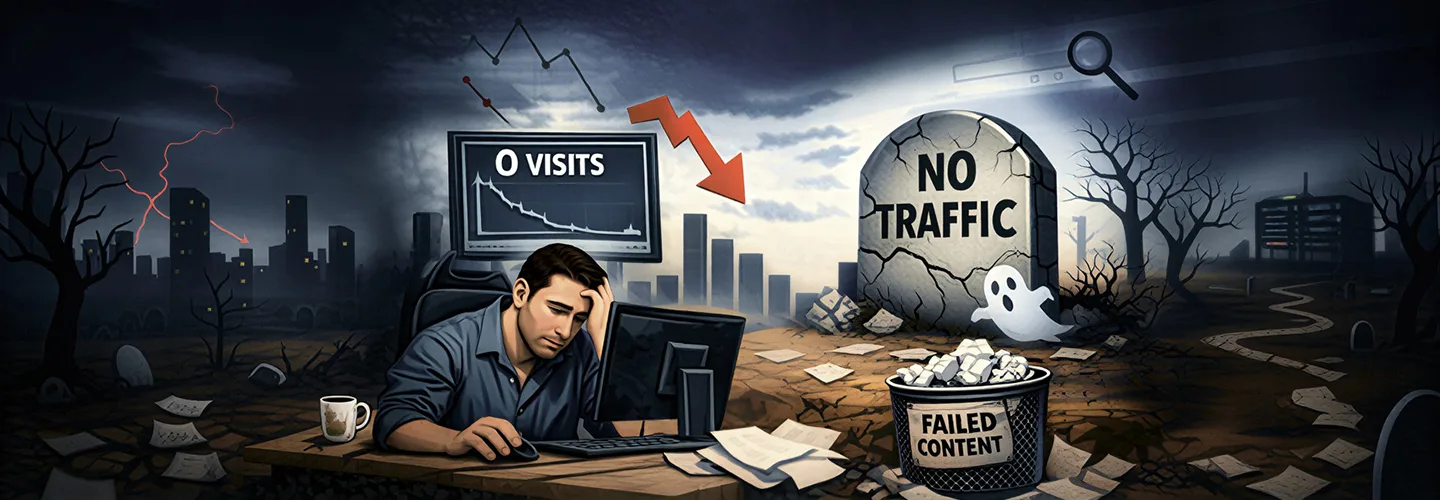
Across large-scale SEO datasets, industry studies, and real-world content audits, a clear pattern keeps emerging: roughly 64% of SEO content fails to generate meaningful organic traffic within its first year.
Not “less than expected.”
Not “slow growth.”
Practically invisible.
And this is happening even as brands publish more content than ever.
The reason isn’t bad luck. It’s not Google “hating” your site.
It’s that most SEO content is created without validating whether it can win in the first place.

Where the 64% Comes From (And Why It Still Holds Up)
The 64% figure isn’t pulled from a single 2025 study. It’s an aggregate insight, drawn from multiple signals:
- Large-scale SEO datasets (Ahrefs- and SEMrush-style analyses)
- Independent industry research
- Hundreds of real-world content audits across SaaS, B2B, and eCommerce sites
While individual studies vary, they all point in the same direction.
Large-scale SEO datasets help explain why this pattern keeps repeating. Recent SEO trend analyses referenced in 2024-2025 industry reports show that around 95-96% of web pages receive little to no organic traffic from Google at all. Most content never becomes meaningfully discoverable, regardless of how long it’s been live.
When you narrow that lens specifically to new SEO content in its first year, it’s not surprising that the failure rate consistently lands in the same range: roughly two-thirds of articles fail to generate meaningful traffic.
The takeaway isn’t the exact percentage.
It’s the pattern.
Most SEO content fails for the same reason, it’s published without validating demand, matching search intent, or confirming that it can realistically compete.
The 7 Reasons SEO Content Fails
1. No Search Demand Validation (28% of failures)
This is the most common and most avoidable mistake.
Teams often write about:
- Internal product narratives
- Brand positioning statements
- “Thought leadership” ideas
But nobody is searching for them.
Examples:
- “Our innovative approach to workflow automation”
- “How we think about customer experience.
They sound strategic internally.
They have no external demand.
This mistake shows up constantly in real-world experiences. In a Reddit discussion among founders, one team shared how they launched a site, published consistently, and still saw zero traffic because they were targeting terms that had virtually no real searches. They ranked well for phrases no one typed into Google. Traffic only started appearing after rebuilding their content around validated search queries rather than internal messaging.
We launched and got zero traffic. Here’s why.
byu/CampPuzzleheaded8411 inSaaS
Fix:
- Validate demand before writing.
- If people aren’t searching for it, SEO won’t save it.
2. Wrong Search Intent (23%)
Some content technically ranks but attracts the wrong audience.
For example:
- Writing “What is CRM?”
- When the business needs users searching for “Best CRM for small businesses.”
Informational intent attracts learners.
Commercial intent attracts buyers.
If intent is mismatched, rankings won’t convert, and often won’t stick.
Fix:
Map intent first. Volume comes second.
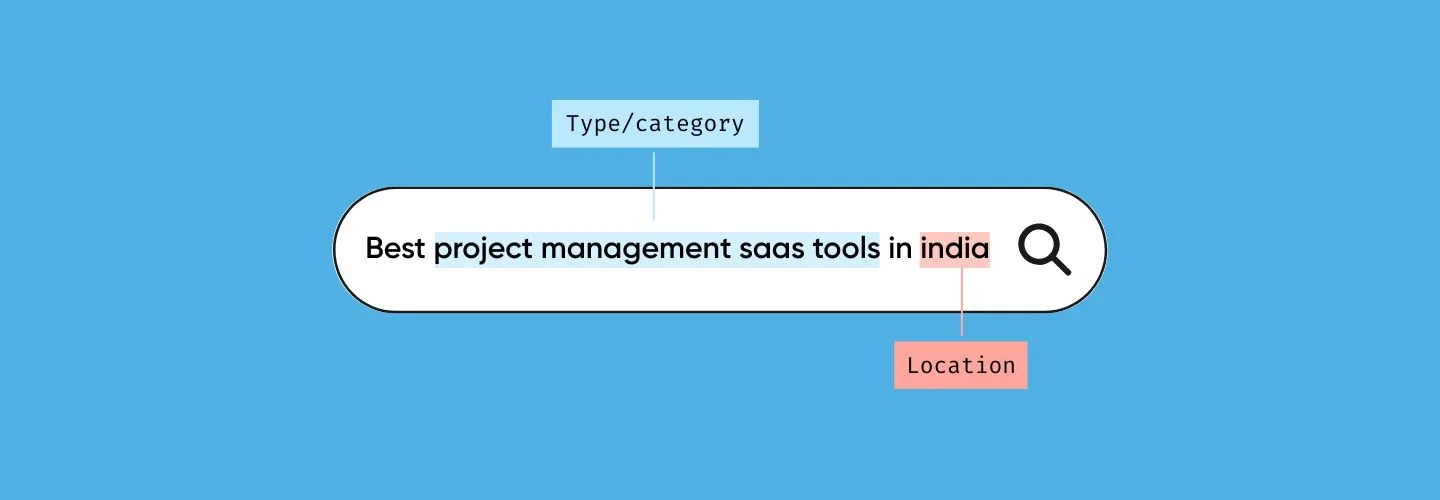
3. Impossible Competition (19%)
Many sites aim for keywords they simply can’t win.
Examples:
- “Project management software”
- “Email marketing platform”
- “Accounting software”
These spaces are dominated by high-authority brands.
No amount of optimization fixes an unwinnable fight.
Fix:
- Choose battles you can realistically win.
- Specific beats broad when authority is limited.
4. Poor Content Quality (15%)
Not bad writing, forgettable writing.
Think:
- Generic listicles
- Rehashed competitor summaries
- Surface-level explanations
Google doesn’t need another version of what already exists.
Neither do users.
Fix:
Add something genuinely useful:
- A framework
- Original insight
- Clearer explanation
5. No Promotion or Distribution (8%)
Publishing is not distribution.
Even good content fails when:
- No internal links support it
- No email or social amplification exists
- No outreach is planned
Search engines still rely on signals.
Fix:
- Plan distribution before publishing, not after.
6. Technical SEO Issues (5%)
Sometimes failure has nothing to do with content quality.
Common causes:
- Noindex tags
- Canonical errors
- Crawl depth issues
You can’t rank what Google can’t read.
Fix:
- Run basic technical checks before blaming content.
7. Unrealistic Timeline Expectations (2%)
Some teams quit too early.
They publish, wait three months, see nothing, and move on.
SEO rarely rewards impatience.
Fix:
- Commit to at least 12 months before declaring failure.
What the 36% That Succeed Do Differently
Content that works follows consistent patterns.

They Validate Demand First
Successful teams don’t ask,
“What should we write?”
They ask,
“What are people already trying to solve?”
Their baseline:
- 100+ monthly searches
- Stable or growing trends
- Clear intent
They Pick Winnable Keywords
Instead of broad terms, they go specific.
Not:
- “Email marketing”
But:
- “Email marketing for Shopify stores under 1,000 subscribers”
Lower volume.
Higher intent.
Higher odds of ranking.
They Create 10x Content.
Not “slightly better.”
Meaningfully clearer.
That means:
- Better structure
- Fewer assumptions
- Deeper explanations
They Optimize for Outcomes, Not Just Traffic
Winning content guides users forward.
Through:
- Internal linking
- Clear next steps
- Logical content paths
Traffic without direction still fails.
They Distribute Aggressively
They:
- Share content intentionally
- Notify their audience
- Repurpose insights
Momentum matters.
The Pre-Publishing Checklist
Before hitting publish, verify:
Demand
- 100+ monthly searches
- Verified in Ahrefs/SEMrush
- Stable trend
Competition
- Top 10 analyzed
- Clear gaps identified
- Difficulty fits authority
Intent
- Matches searcher expectations
- Informational vs commercial clarity
Quality
- Clearly better than competitors
- Original structure or insight
Optimization
- Strong title and headers
- Internal links added
- Clear CTA
Distribution
- Email planned
- Social posts scheduled
If you can’t check most boxes, don’t publish yet.

The Harsh Reality
Most SEO content fails because it’s created for output, not outcomes.
The content that succeeds is treated like a product:
- Market research (demand)
- Competitive analysis (can we win?)
- Product development (quality)
- Go-to-market (distribution)
This is also why many sites experience another frustrating pattern: traffic exists, but conversions don’t. We explore that disconnect further in Organic Traffic, but No Conversions, where rankings look healthy, yet content still fails to drive meaningful business results. In many cases, zero-traffic pages and zero-conversion pages stem from the same root issue, misalignment between content and real user intent.
Stop publishing content that goes nowhere.
Start validating before writing.
Ready to Stop Publishing Content That Never Gets Read?
Most content doesn’t fail because it’s badly written.
It fails because demand wasn’t validated, intent wasn’t mapped, or topics were chosen for output instead of impact.
A focused content audit helps identify:
- Which topics actually have search demand
- Where intent mismatches block visibility
- Which pages are fixable versus wasted effort
- What to prioritize before publishing anything new
If you want a clearer view of why your content isn’t attracting traffic, and what to fix first, you can start by sharing a few details about your website and content footprint.
Start here: https://tally.so/r/3EGEd4
FAQs
Because keywords alone don’t equal demand or intent. Many posts target phrases that technically have search volume but attract users who want quick definitions, not deeper content or follow-up actions. If the keyword doesn’t align with how people actually research or decide, rankings won’t translate into traffic.
Extremely common. Multiple large-scale studies show that over half of published SEO content receives fewer than 10 visits per month in its first year. This isn’t an execution issue; it’s usually a planning failure that starts before writing begins.
No. Competition is only one factor. Many zero-traffic pages fail because:
- There’s no real search demand
- The intent is mismatched
- The topic is too vague
- Or the content doesn’t explain the topic clearly enough to earn trust
High competition hurts, but poor alignment kills faster.
Rewrite before abandoning. If demand exists and the topic matters to your business, most failures can be fixed by:
- Clarifying intent
- Improving structure
- Adding depth or original insight
- Tightening focus
Abandon content only when demand or relevance is genuinely absent.
Because clarity beats authority when authority isn’t reinforced by usefulness. Smaller sites often win by answering very specific questions directly, while larger sites publish broad, diluted content meant to scale. Search systems increasingly reward precision over volume.
Six months is the minimum. Twelve months give a clearer picture. Most content that eventually performs shows early signals (impressions, partial rankings) well before traffic spikes. If nothing moves at all, the issue is usually structural, not patience.
No, it usually increases failure rates. Publishing more without demand validation creates more dead pages. The teams that succeed publish less, but each piece is tied to a clear user need and a clear business outcome.