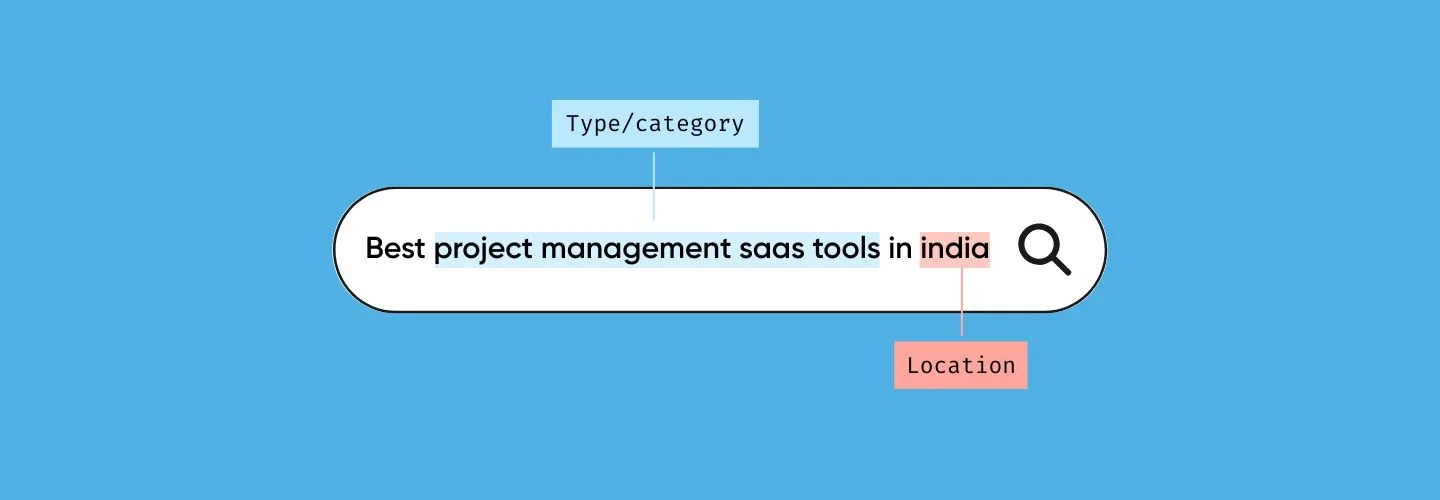
Should You Build Deep Topical Authority or Cover Everything? How to Choose the Right SEO Strategy for Your Business
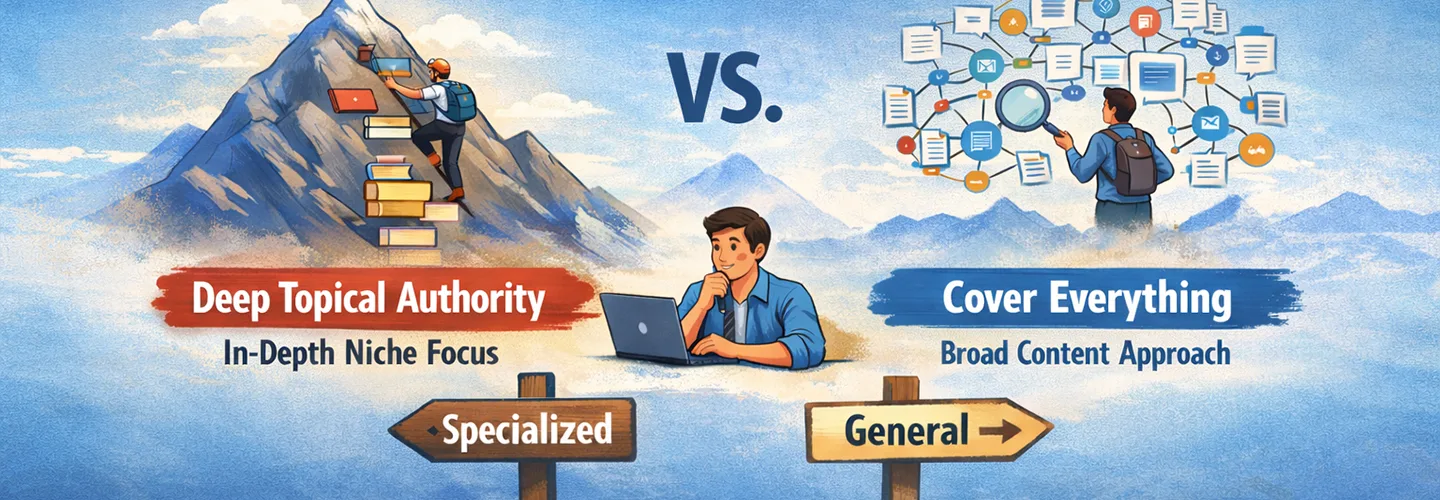
“Should we write about everything in our industry, or focus only on what we sell?”
If you have ever worked on SEO, this question comes up sooner or later.
Some teams want to become the go-to experts for one specific topic. Others want to rank for everything related to their category. Both sound smart. Both can work.
But here’s the uncomfortable truth most SEO advice skips over:
With limited time, people, and budget, you can’t maximize relevance and authority at the same time.
Trying to do both usually leads to average results on both fronts.
In this article, we will break down:
- What SEO relevance and topical authority actually mean (in simple terms)
- Why there’s a real trade-off between them
- When it makes sense to go deep vs go broad
- How growing companies should sequence their SEO strategy over time
No theory. Just practical decision-making.
Understanding the Trade-Off: Relevance vs Authority
Before choosing a strategy, let’s make the difference clear.
What SEO Relevance Really Means (Depth)

Relevance is about depth.
It means becoming exceptionally good at one narrow topic.
Example: Instead of writing about all of email marketing, you focus only on email deliverability.
Your strategy looks like this:
- 40-60 articles on deliverability alone
- Every angle covered: SPF, DKIM, DMARC, inbox placement, bounces, spam filters
- Beginner questions, advanced guides, tools, and troubleshooting
What Google sees: “This site really knows email deliverability.”
Benefits:
- Strong rankings for niche, high-intent keywords
- Higher trust for that topic
- Better conversions
Risks:
- Limited total traffic ceiling
- You won’t rank for adjacent topics
What SEO Authority Really Means (Breadth)
Authority is about breadth.
It means covering many related topics across a category.
Example:
Instead of focusing only on deliverability, you write about:
- Email design
- Email automation
- Copywriting
- Analytics
- Deliverability
- Tools
- Strategy
Your strategy:
- 50 articles across 10 different email marketing topics
What Google sees: “This site covers email marketing broadly.”
Benefits:
- Wider keyword footprint
- More total traffic potential
- Category-level visibility
Risks:
- You don’t dominate any single topic
- Rankings are often mid-page (positions 10-20)
- Lower buyer intent
Why You Can’t Fully Optimize Both (With Limited Resources)
Let’s make this practical.
You can publish 50 articles this year.
Option A: Relevance (Depth)
- 50 articles on one topic (email deliverability)
- Rank top 3 for most deliverability keywords
- ~5,000 visits/month
- Highly qualified traffic
Option B: Authority (Breadth)
- 5 articles each on 10 topics
- Rank across many keywords, but not strongly
- ~8,000 visits/month
- Lower intent, lower conversions
Neither is “wrong.”
But they serve very different business goals.

This same issue shows up in content velocity strategies, too. As we explained in our breakdown of the Content Velocity Trap, publishing more content across too many topics often increases traffic without improving conversions, because intent gets diluted.
That’s the trade-off.
This tension between relevance and authority isn’t just theoretical. Many SEO practitioners describe a clear “aha moment” when they realize that spreading content across too many topics weakens topical signals. In one discussion, an SEO explains how authority started to make sense only after focusing content tightly enough for Google to clearly understand what the site was actually about. Once that clarity existed, rankings improved, not because of more content, but because of better alignment between topic depth and search intent.
A Few Things That Finally Clicked About Authority, Topics, and How Google Actually Ranks Pages
byu/Legitimate-Salary108 inSEO
When You Should Choose SEO Relevance (Go Deep)
Relevance works best when focus matters more than reach.
Choose relevance if:
1. You are in a niche market
If you serve a specific audience (e.g., ecommerce brands, SaaS startups, healthcare providers), broad coverage won’t help much.
Example: Instead of “email marketing,” own “email marketing for ecommerce.”
2. Your product does one thing extremely well
If your product solves a specific problem better than anyone else, your content should reflect that.
Example: A tool built for deliverability should become the deliverability authority.
3. Your competitors are generalists
When competitors write one shallow article per topic, depth becomes your advantage.
Example: They publish one deliverability guide. You publish fifty.
4. Your best keywords are high-intent but narrow
Keywords like:
- “DMARC record generator”
- “email bounce rate fix”
- “SPF alignment error”
These don’t drive massive traffic, but they convert.
5. You are early-stage or resource-constrained
If you have 1-2 content writers, breadth will spread you thin.
Better approach: Win one topic → expand later.

A Simple Relevance Playbook
Year 1:
- Pick one core topic
- Publish 40-60 pieces
- Cover every real question
Year 2:
- Expand into closely related topics
Year 3:
- Broader authority becomes possible
Real example:
Postmark built early authority by writing deeply about email delivery and authentication before expanding into broader email topics.
When You Should Choose SEO Authority (Go Broad)
Authority makes sense when your business demands wide visibility.
Choose authority if:
1. You are a multi-product platform
If your product spans many use cases, niche content won’t reflect reality.
Example: HubSpot
2. You are creating or owning a category
Category creation requires presence across many conversations.
3. Your buyers research heavily
Long sales cycles mean buyers touch multiple topics before deciding.
4. You have serious content resources
Authority strategies work when you can maintain quality at scale.
Example: Ahrefs, SEMrush
The Authority Playbook
Phase 1 (0-6 months):
- Identify 10-15 core topics
- Create strong pillar pages
Phase 2 (6-18 months):
- Build supporting clusters
- Expand coverage within each topic
Phase 3 (18+ months):
- Go deeper on topics that convert best
The Decision Framework (Use This Before You Publish Anything)

Ask yourself:
1. What’s your domain strength?
- Low authority → relevance first
- High authority → breadth possible
2. How big is your content team?
- 1-2 people → relevance
- 5+ people → authority
3. How focused is your product?
- Single problem → relevance
- Platform → authority
4. Who are your competitors?
- Generalists → go deep
- Specialists → go broader
5. What stage is your business in?
- Early → relevance
- Scaling → transition
- Enterprise → authority
If most answers point one way, that’s your strategy.
The Hybrid Approach (Advanced, But Powerful)
Yes, you can do both.
Just not at the same time.
The smart sequencing strategy:
Phase 1:
Deep relevance in 1-2 topics
Phase 2:
Expand into adjacent areas
Phase 3:
Broader authority with maintained depth
This phased approach mirrors how many SEO practitioners think about topical growth. One SEO discussion explains how building strong clusters around a topic first helps search engines associate your site with that subject, before you expand outward:
SEO Strategy Is About Focus, Not Volume
SEO relevance and authority are both valid strategies.
The challenge is choosing which one fits your current situation.
For most small and growing businesses:
- Relevance provides clearer positioning
- Authority becomes practical later
Understanding this trade-off helps teams avoid spreading effort too thin and enables more intentional content planning.
Next step:
List your top content topics.
Identify whether depth or breadth would realistically deliver better outcomes right now.
If you want help evaluating that decision, you can share context here: https://tally.so/r/3EGEd4
Common Questions About SEO Relevance vs Authority
SEO relevance refers to how closely your content matches a specific topic or search intent. Topical authority goes a step further; it reflects how deeply and consistently you cover that topic across multiple related pages. A site can be relevant for a keyword without having strong topical authority, but authority usually requires sustained depth.
Yes, individual pages can rank without strong topical authority, especially for low-competition keywords. However, rankings are often unstable and harder to scale. Topical authority helps improve consistency, internal linking strength, and long-term visibility across related queries.
Google looks at signals such as content depth, internal linking, topic coverage, and semantic relationships between pages. When many pages answer related questions within one topic, it becomes easier for search engines to associate the site with that subject area.
Topical authority and backlinks serve different purposes. Backlinks help establish trust and popularity, while topical authority helps establish expertise and relevance. In competitive spaces, both matter, but topical authority often determines which pages deserve to rank once links exist.
There is no fixed number. Some niches require 15-20 high-quality articles, while others may need 40-60. What matters more is covering all meaningful subtopics and user questions, not hitting a content count target.
It can limit short-term traffic volume, but it often improves traffic quality. Many sites use depth-first strategies to build authority in one area, then expand into adjacent topics once trust and rankings are established.
Expansion usually makes sense after consistent rankings, stable traffic, and clear conversion signals exist in the core topic. This often happens after 12-18 months of focused publishing, depending on competition and resources.
It is possible, but difficult. New sites usually lack the trust signals needed to compete across many topics. Starting with relevance allows search engines to understand the site’s expertise faster and reduces competition pressure.
Internal links help connect related pages and show how topics are structured. When subtopic pages link back to core content and each other, it strengthens topical signals and improves crawlability and ranking potential.
No. Technical and B2B industries usually require deeper coverage to establish authority, while lifestyle or trend-driven topics may rely more on freshness and engagement. The level of depth needed depends on user expectations and competition.