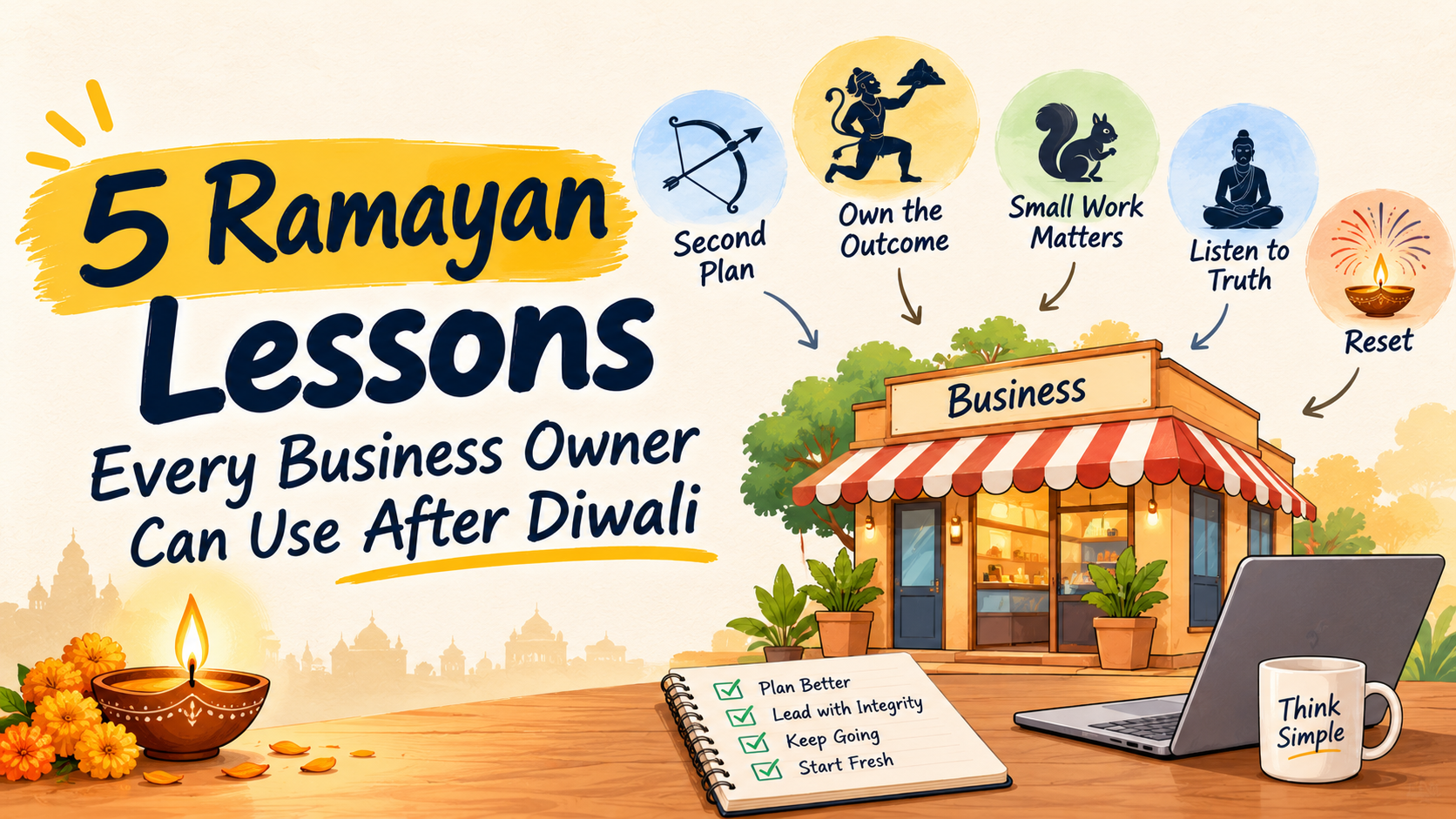
Every Diwali we light diyas because Ram came back to Ayodhya after 14 years. We hear this story every year, but we rarely read it like a business story.
Look at it once that way: a long project, a sudden setback, a small team, a hard fight and a happy return. That is exactly how running a business feels. So here are 5 lessons from the Ramayan, and each one has one thing you can do this week.
A diya, drawn the way we would on paper.
1. Ram took the setback and moved on
Ram was supposed to become king the next morning. Instead he was told to leave for 14 years. He did not argue and he did not blame anyone. He packed and walked.
Your version of this is a Google update, a banned ad account, or your biggest client leaving. Say you run a clothes shop in Ahmedabad and 80% of your orders come from one Instagram page. One day the page is restricted. The owner who only has Instagram loses weeks. The owner who also has a WhatsApp customer list and a Google Business Profile keeps selling the same day.
2. Hanuman owned the job
Hanuman was told to find Sita. Nobody gave him a step-by-step plan. He crossed the sea, found her, passed on Ram’s message and came back with the news. He took the outcome, not just the task.
Most owners give their team steps: “post 3 reels this week.” A Hanuman-style goal sounds different: “get 10 enquiries from Instagram this month, you decide how.” The first gets you work done. The second gets you someone who thinks.
3. The small squirrel mattered
The bridge to Lanka was built by the whole Vanar Sena, with huge stones. There is also a folk story about a tiny squirrel who rolled in sand and shook it off between the stones to help. Ram noticed and stroked its back with love. People say that is why squirrels have stripes.
Believe the story or not, the point is clear: small work counts, and the leader noticed it. In your business that is the accountant who fixes invoices late at night, or the helper who opens the shop at 8 am.
Every stone in the bridge was somebody’s work.
4. Vibhishan told the truth
Ravan’s own brother told him to return Sita. Ravan threw him out of the court. In the end Ravan lost everything, and the one honest voice was sitting with the other side.
Owners hear “sir, sab badhiya hai” a lot. Say your website gets traffic but no enquiries, and everyone says it is fine. It is not fine. Someone in your circle already knows why, but nobody wants to say it.
5. Diwali is a reset button
Gujarati traders already do this well. On Diwali they do Chopda Pujan, where new account books are opened, and the new year (Bestu Varas) starts right after. It is a clean start with a clear picture of the old year.
Close the old book. Open a new one.
You can do the same, even if you do not run a trading business. Use this simple checklist:
- Close last year’s numbers: sales, expenses, what worked, what did not.
- Send polite reminders for old pending payments.
- Call your top 10 customers just to say thanks, not to sell.
- Set 3 goals for the new year, not 15.
- Pick one thing to stop doing.
The short version
Have a second plan (Ram), give outcomes (Hanuman), notice small work (the squirrel), listen to the honest voice (Vibhishan) and reset every year (Diwali). Pick one and do it this week. That is better than reading ten more blogs.
FAQs
What is the connection between Ramayan and Diwali?
Diwali is widely celebrated as the day Ram returned to Ayodhya after 14 years of exile and the win over Ravan, when people lit lamps to welcome him. Different regions also tie Diwali to other stories, such as Lakshmi Puja, so it is one of several traditions.
What is Chopda Pujan?
It is a tradition mostly among Gujarati and Marwari traders. New account books are worshipped on Diwali and the business year starts fresh from there.
Can I use the Ramayan in my business posts and messages?
Yes, if you do it with respect. Share the lesson, not a sales push. Avoid using images of gods only to promote a discount.
What should I do for my customers right after Diwali?
Send a simple thank-you message on WhatsApp or email, without an offer attached. Customers remember the ones who called to say thanks, and many will come back on their own.
Before you close this tab, pick just one of the five and try it before the week ends. And if you want help with the online side, like how customers find you and why they stay, tell us a little about your business in this short form and we will get back to you.