Microsoft CEO Satya Nadella says AI agents are about to change who wins online. Speaking at The New York Times DealBook Summit on 18 November 2026, he said the shift to an “agentic web” could reshuffle the business models built for what he called the “human web”. TechCrunch reported it first, and his line has been picked up widely: “if you don’t accept the agent, somebody else will.”
For a business owner, the question is simpler than the economics. When a buyer sends an AI agent to find a supplier, compare prices or fill a form, can that agent use your website? This post explains the shift in plain words and gives you a quick check.
The screenshots in this post are from public TechCrunch articles, as they appeared on 20 November 2026.
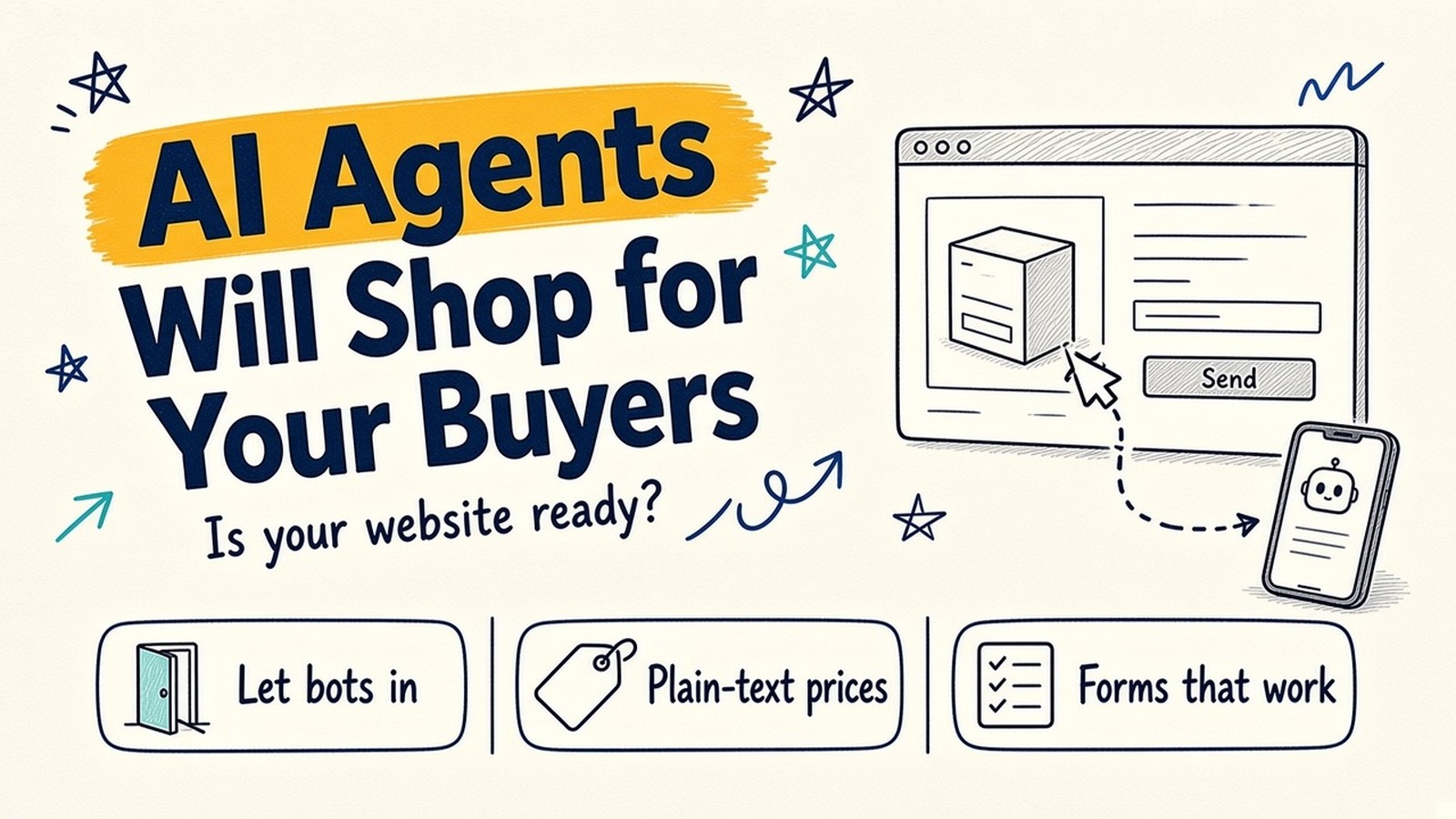
Human web vs agentic web: one instruction, and the agent does the clicking.
What Nadella actually said
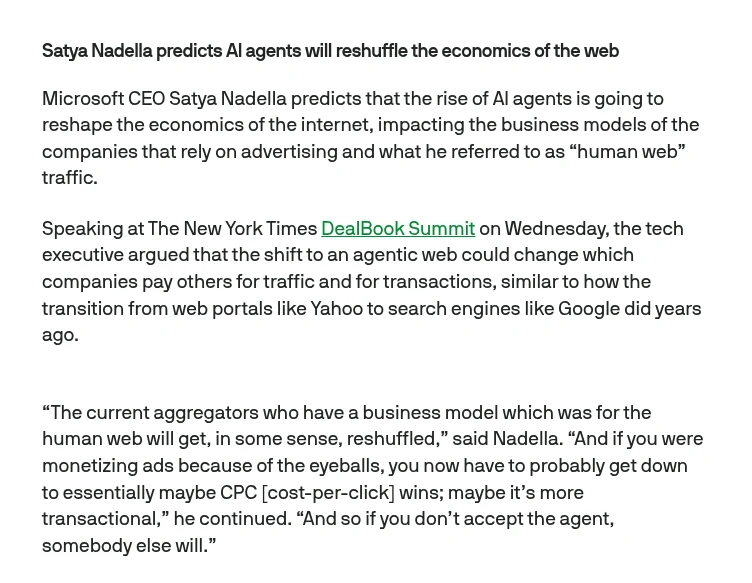
Nadella compared this moment to the move from web portals like Yahoo to search engines like Google, which changed “who pays whom for what”. According to TechCrunch, he said:
“The current aggregators who have a business model which was for the human web will get, in some sense, reshuffled. And if you were monetizing ads because of the eyeballs, you now have to probably get down to essentially maybe CPC [cost-per-click] wins; maybe it’s more transactional. And so if you don’t accept the agent, somebody else will.”
The talk then turned to Amazon, which TechCrunch says blocks AI agents from browsing its catalogue and buying for users. Nadella suggested that if one platform keeps agents out, another, such as Shopify, could let them in and gain the advantage.
Think of it as a personal shopper
Picture a busy buyer who sends a personal shopper out with a list. The shopper walks into your store. If the door is locked, they leave. If the price tags are blank, they leave. If the order form is in a back room nobody can find, they leave. They simply buy from the next store, and you never know they came.
An AI agent works much the same way. It does not admire your design. It needs to get in, read what you sell, and finish a task.
The personal shopper test: an AI agent leaves just as fast when it cannot get in, read or order.
Early signs this is already happening
In the same week, TechCrunch reported two related moves:
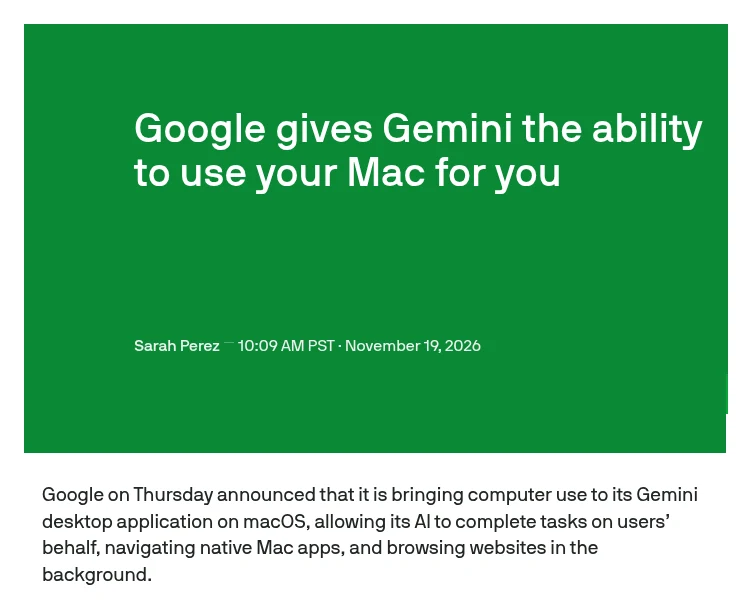
- Google gave its Gemini app for Mac the ability to use your computer for you. TechCrunch says it can navigate apps and browse websites in the background, and Google lists filling out forms among the uses. It started in English in the US for paid Google AI plans.
- Apple may be building its own agent. TechCrunch, citing Bloomberg, reported an Apple job listing for an “AI agent that can use a computer”, one that “browses the web, works across apps” and more. Bloomberg says the work is in early stages.
This is not the end of normal websites. People still visit and call. But it is worth checking your site now, while fixes are cheap.
Three checks: can an AI agent get in, read what you sell, and finish the task?
Check 1: Can AI bots get into your site?
This is often a setting, not a decision anyone made. Three places to look:
- Your robots.txt file. OpenAI, for example, says sites that block its OAI-SearchBot crawler will not be shown in ChatGPT search answers. It also uses a separate agent, ChatGPT-User, when a person asks ChatGPT to visit a page.
- Your firewall or CDN. In July 2025, Cloudflare announced it was changing its default to block AI crawlers unless they pay for content. That may suit a publisher. For a business that wants enquiries, it is worth checking what your settings do.
- Security plugins and hosting rules, which can block unfamiliar bots without telling you.
Blocking some bots can be the right choice. The point is to choose, not to find out later.
Check 2: Can an agent read what you sell and what it costs?
An agent reads text. If your products, services, prices, lead times or minimum order quantities live only inside images, PDFs or “call us” buttons, an agent may come back with nothing.
- Put key facts in plain text on the page: what it is, who it is for, price or price range, and how to buy or enquire.
- Add structured data. Google’s product structured data guidance says it can show price, availability and more in search results, and the same clear labels help any machine read the page.
- Keep one clear page per product or service, not ten items squeezed into one.
Check 3: Can an agent finish the task?
This is the part owners rarely test. Forms with tricky captchas, fields with no labels, pop-ups that cover the button, or a checkout that only works with a mouse can stop an agent, and often a human too.
We are not saying remove every safeguard. Spam protection matters. But a form a careful person can fill in, step by step, is a good sign an agent can too. This check is hard to do properly alone, because you need to test with real AI tools and read what they report back.
When it is time to get help
Checking robots.txt takes minutes. Finding which bots your firewall blocks, rewriting pages so agents can read them, adding structured data and testing forms with real agents takes steady work. That is the work we do. For more on the AI search side, read how to get your brand cited in ChatGPT and why AI search ignores some SEO content.
The short version
- At the DealBook Summit, Satya Nadella said AI agents will reshuffle business models built for the “human web”.
- His warning: “if you don’t accept the agent, somebody else will.”
- Google and Apple news this week point the same way: agents that browse and act for people.
- Check 1: make sure AI bots are not blocked by accident in robots.txt, your firewall or plugins.
- Check 2: put products, services and prices in plain text, with structured data.
- Check 3: test whether an agent can actually fill your enquiry form or checkout.
FAQs
What did Satya Nadella say about AI agents?
At the New York Times DealBook Summit, he said AI agents will reshuffle the economics of the web, and “if you don’t accept the agent, somebody else will.”
What is the agentic web?
It is a web where AI agents browse, compare and complete tasks for people, such as filling forms or buying, instead of people doing every click.
Should my business block AI bots?
It depends on your goals. A publisher may want to. A business that wants enquiries should usually let search and agent bots read its key pages. Decide on purpose.
How do I know if my website blocks AI agents?
Check your robots.txt, your firewall or CDN settings and your security plugins. Then test your site with an AI tool and see what it can read.
Do AI agents need special code on my site?
Not to start. Clear text, one page per product or service, structured data and simple forms go a long way.
Not sure what an AI agent sees on your website?
Send us your website and we’ll check what an AI agent sees on it, free. Talk to us through our form or on WhatsApp at +91 99131 53530. The first conversation is free.
:::