Think of a farmer who sells only through the commission agent at the mandi. The agent knows the buyers, sets the price and keeps a cut. The farmer never meets the people who eat his crop.
Many Indian manufacturers sell abroad the same way. Orders come through an agent, a trade fair or a B2B portal. These channels work, but the buyer belongs to someone else.
Your own website is your own shop on the main road. A buyer in Dubai, Germany or the US can search, find you and write to you directly.
The screenshots in this post are from public pages on DGFT, Market Finder, Google Trends and Google Search Central, as they appeared on 17 November 2026.
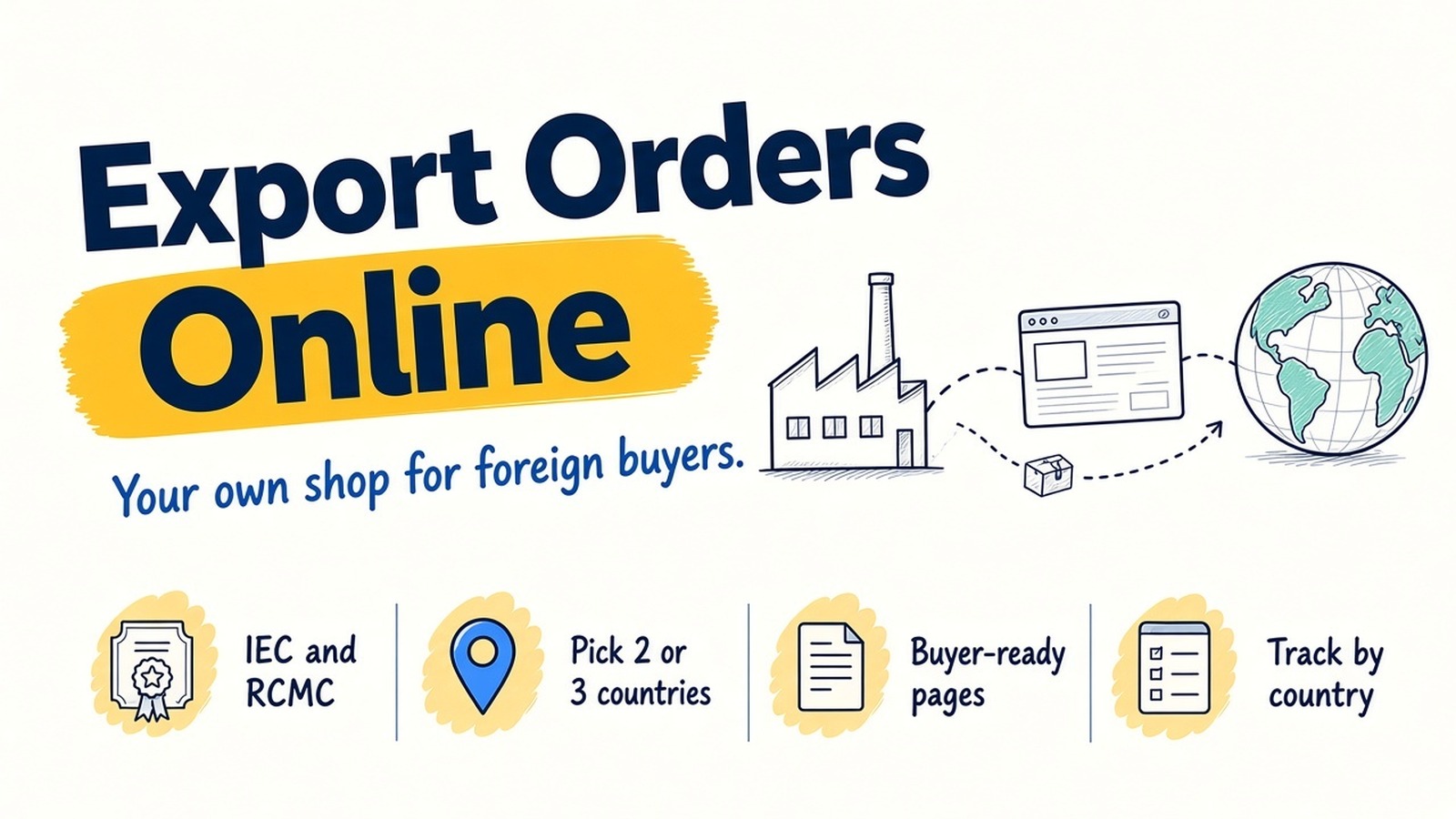
Through an agent, the buyer belongs to someone else. With your own shop, the buyer can walk straight in.
Get your export basics in order first
Before you chase buyers, make sure you can legally ship.
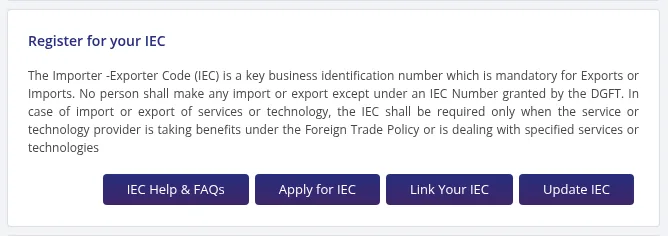
- IEC (Importer Exporter Code): DGFT says no person can import or export goods without an IEC, unless exempted. You apply online at dgft.gov.in. Your IEC is the same as your firm’s PAN.
- Update it every year: the Foreign Trade Policy says you must update or confirm your IEC online every April to June, even if nothing changed. If you miss it, the IEC is de-activated. DGFT charges no fee for this yearly update.
- RCMC from your Export Promotion Council: an RCMC (Registration-cum-Membership Certificate) comes from the council for your product. Examples from DGFT’s list: GJEPC for diamonds and jewellery, EPCH for handicrafts, EEPC India for engineering goods, and Texprocil for cotton textiles. DGFT says an RCMC is valid for five financial years.
Pick 2 or 3 countries using free data
Do not try to sell to the whole world at once. Start with the countries where buyers already search for what you make.
Three free tools help:
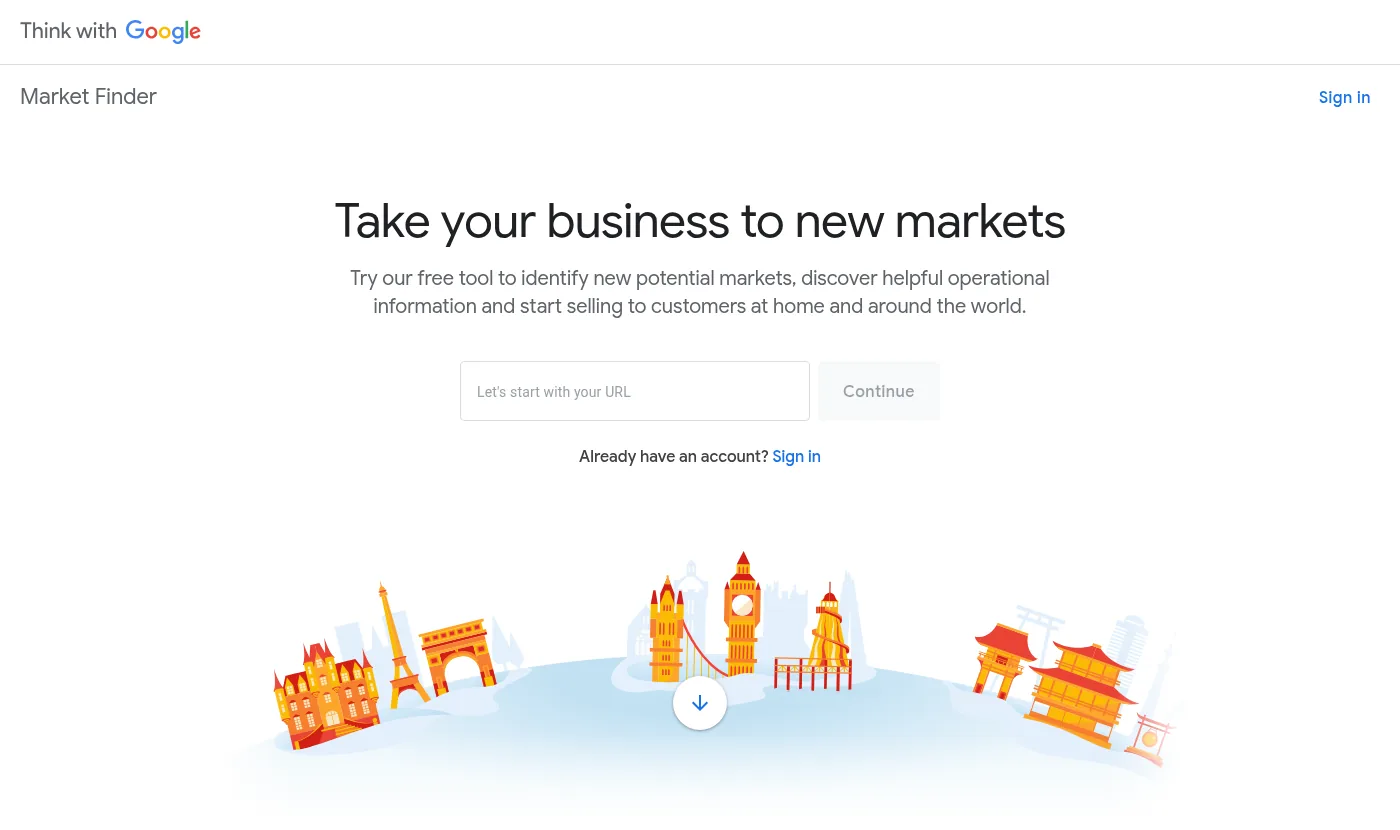
- Market Finder by Google: Google built it to help businesses find promising export markets and prepare for them. It is free at marketfinder.thinkwithgoogle.com.
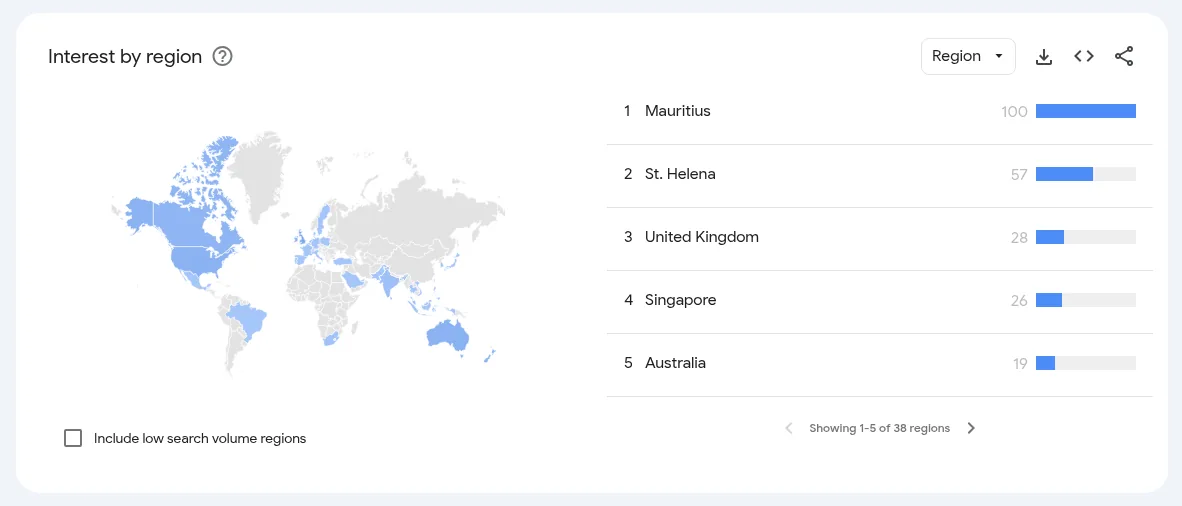
- Google Trends: type your product, such as “teak furniture”, and open the map. Google says darker areas show where the term is more likely to be searched.
- Trade Connect (trade.gov.in): DGFT’s portal for exporters. As per the Government, it has product and country guides, a tariff explorer, trade events and an “Ask an Expert” feature with officials from Indian missions abroad and export councils.
If you run Google Ads, Keyword Planner shows keyword ideas and traffic estimates for the locations you choose.
The same idea works at home first. For an office furniture manufacturer, we picked the buyers and the places before anything else. We used social media to reach architects and business owners in Ahmedabad, Vadodara, Dahej, Sanand, Viramgam, Bahucharaji, Thol, Kadi, Changodar, Bavla, Bhayla, Dholka, Bharuch, Ankleshwar and Kim. Abroad, a country takes the place of a town.
Build pages a foreign buyer can trust
A buyer abroad cannot visit your factory first. Your website has to do that job.
For each main product line, make one clear page with:
- what you make, with real photos of your products and factory
- specs, sizes, materials and grades
- minimum order quantity, lead time and packaging
- certifications you actually hold
- the ports and countries you already ship to, if any
- a simple enquiry form that asks for country, product, quantity and target date
What a buyer-ready product page holds.
Then add a page for each target country. Explain what you supply there, which standards you follow for that market, and how shipping works. Google says signals such as local addresses and phone numbers, the local language and currency, and links from local sites help it understand who a page is for. Only add these if they are true for your business.
Write in plain English first. Add other languages only when you can get the translation checked by a native speaker.
Set up your site for each country
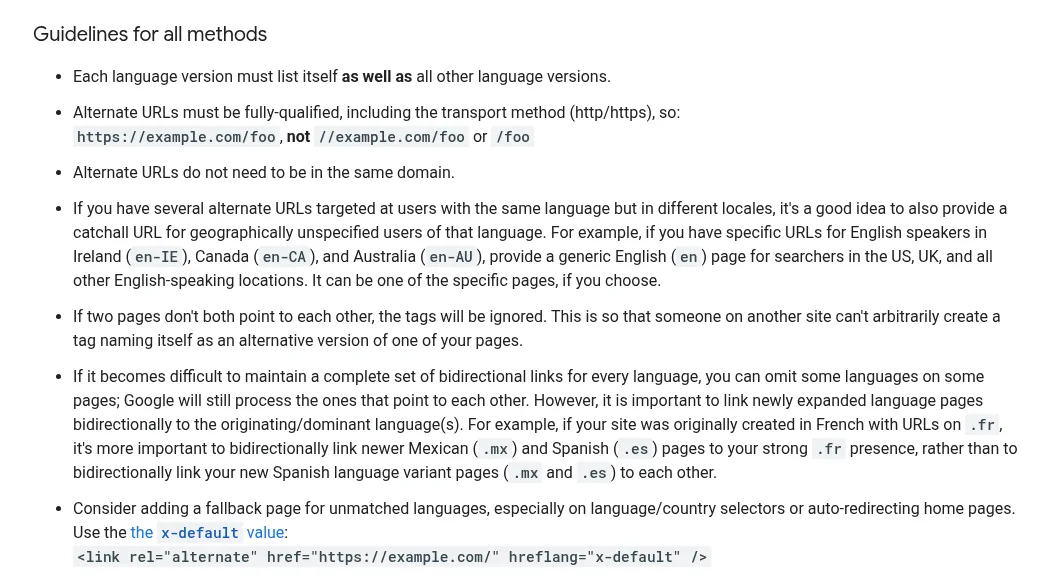
If you have separate pages for different countries or languages, tell Google clearly. Google Search Central gives these rules:
- Use different URLs for each language version, not cookies or browser settings.
- Use hreflang tags (a small code that tells Google “this page is the UK English version, this one is the German version”). Each version must list itself and all the other versions.
- Pick a URL style: a country domain (example.de), a subdomain (de.example.com) or a folder (example.com/de/). Google says folders are easy to set up and low maintenance.
- Do not auto-redirect visitors by their IP address. Google says IP location is not reliable and its crawlers mostly come from the US. Let visitors choose their country or language instead.
One site, many countries. Each version points to the others with hreflang.
Get found in AI answers too
Google Search now has generative AI features, and Google has a guide on how to show up in them. You do not need tricks for this.
Google’s guide on generative AI search says:
- Content that is unique, compelling and useful matters more than anything else.
- A first-hand view helps, because a summary of what others said is less useful.
- No special schema markup is needed for AI search.
- You can see how your content performs in Google’s AI features in the Generative AI performance report in Search Console.
For a manufacturer, first-hand content is easy to make. Show your own process, your quality checks, your packing line and real answers to buyer questions. Nobody else can copy that.
We did this for a diamond manufacturer. Our team visited its factory, its offices and the places it gets rough stones from. We wrote about each step from rough stone to polished diamond, added real photos and videos, and made the site faster. This helped it bring buyer leads from the USA, Hong Kong and other countries. Read our diamond manufacturing SEO case study. Our post on getting found by AI tools with llms.txt covers one more step.
Track enquiries by country
- Google Search Console: the Performance report has a Countries tab. It shows which countries see and click your pages.
- Your enquiry form: make “country” a required field, so every lead is tagged.
- Google Ads: if you test ads, Google Ads lets you target people by location. Start with one country where Trends showed demand.
Check these once a month. Put more pages and effort into the countries that send real enquiries, and drop the ones that do not.
The short version
- Get your IEC from dgft.gov.in and update it every April to June.
- Get an RCMC from the Export Promotion Council for your product.
- Use Market Finder, Google Trends and Trade Connect to pick 2 or 3 countries.
- Build one clear page per product and per target country, with specs, MOQ and certifications.
- Use hreflang for country or language versions, and never auto-redirect by IP.
- Track enquiries by country in Search Console and your enquiry form.
FAQs
How do I get export orders from foreign buyers online?
Pick 2 or 3 countries using search data, build clear product and country pages on your own website, and make it easy for buyers to send an enquiry.
Do I need an IEC to export from India?
Yes. DGFT says no person can import or export goods without an IEC, unless specifically exempted. You apply online at dgft.gov.in.
Is a B2B portal enough to get export orders?
Portals can bring leads, but the buyer relationship stays on the portal. Your own website builds direct enquiries that belong to you.
Do I need a separate website for each country?
Not always. Google lists country domains, subdomains and folders as options. Folders on one site are easy to set up and low maintenance.
Want foreign buyers to find your factory, not just your agent?
We help Indian manufacturers build export-ready websites, country pages and search visibility on Google and AI tools. Talk to us through our form or on WhatsApp at +91 99131 53530. The first conversation is free.