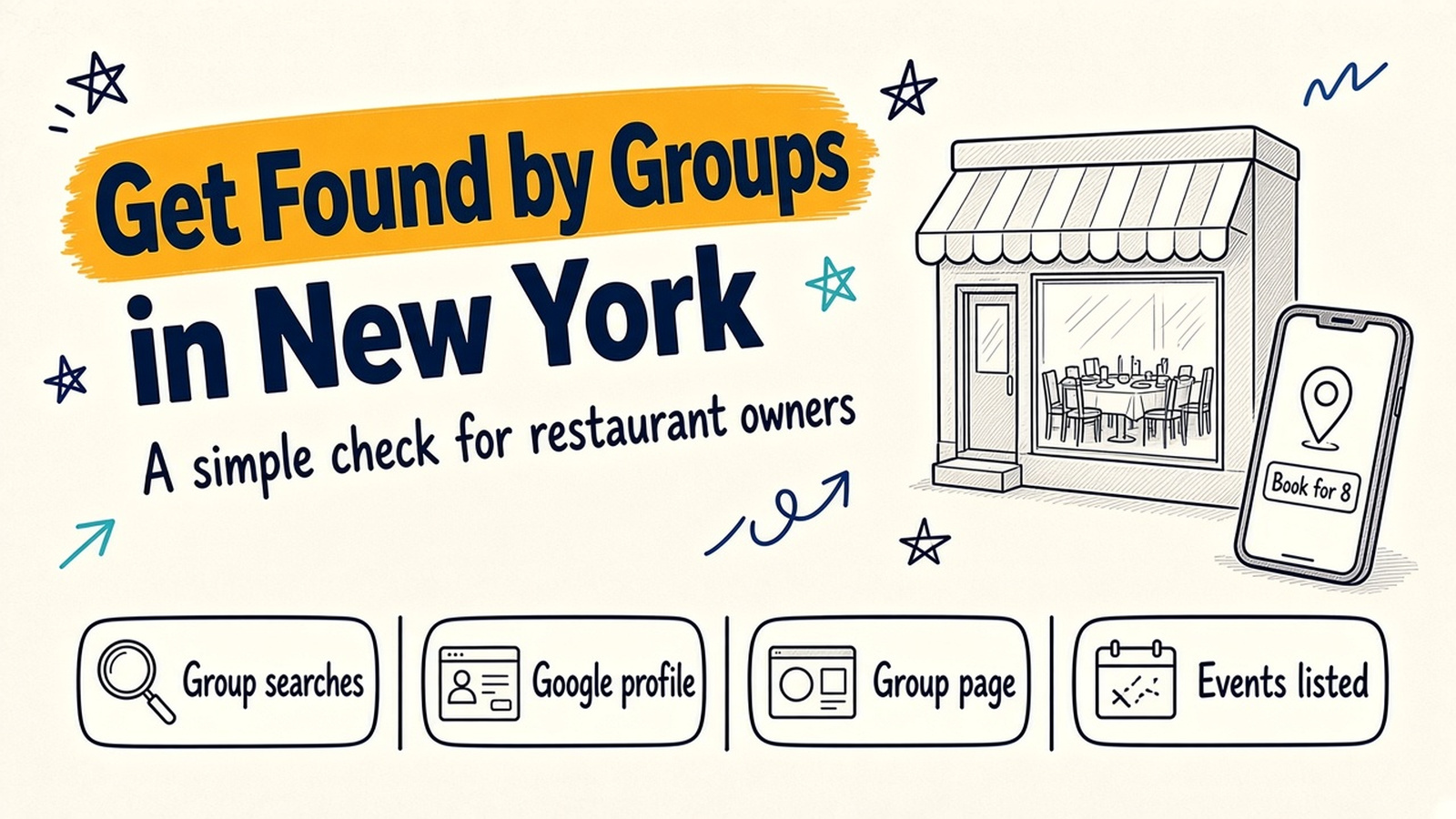
Picture a group chat with eight people trying to pick a place for Friday. One person makes a shortlist. Everyone else asks the same questions. Do they take bookings? Is there room for eight? What does it cost? The place with missing answers gets dropped first.
That is how many group bookings are won or lost in New York. Not on the food, but on whether the group can quickly find what it needs.
This guide is for owners of restaurants, cafes, wine bars and event venues in New York. It shows how groups look for places, and a simple check you can run on your own listing and website.
The screenshots in this post are from a public TechCrunch article and Google’s public Business Profile Help pages, as they appeared on 23 November 2026.
The group chat test: the place that cannot answer size, booking and price gets dropped first.
What TechCrunch reported this week
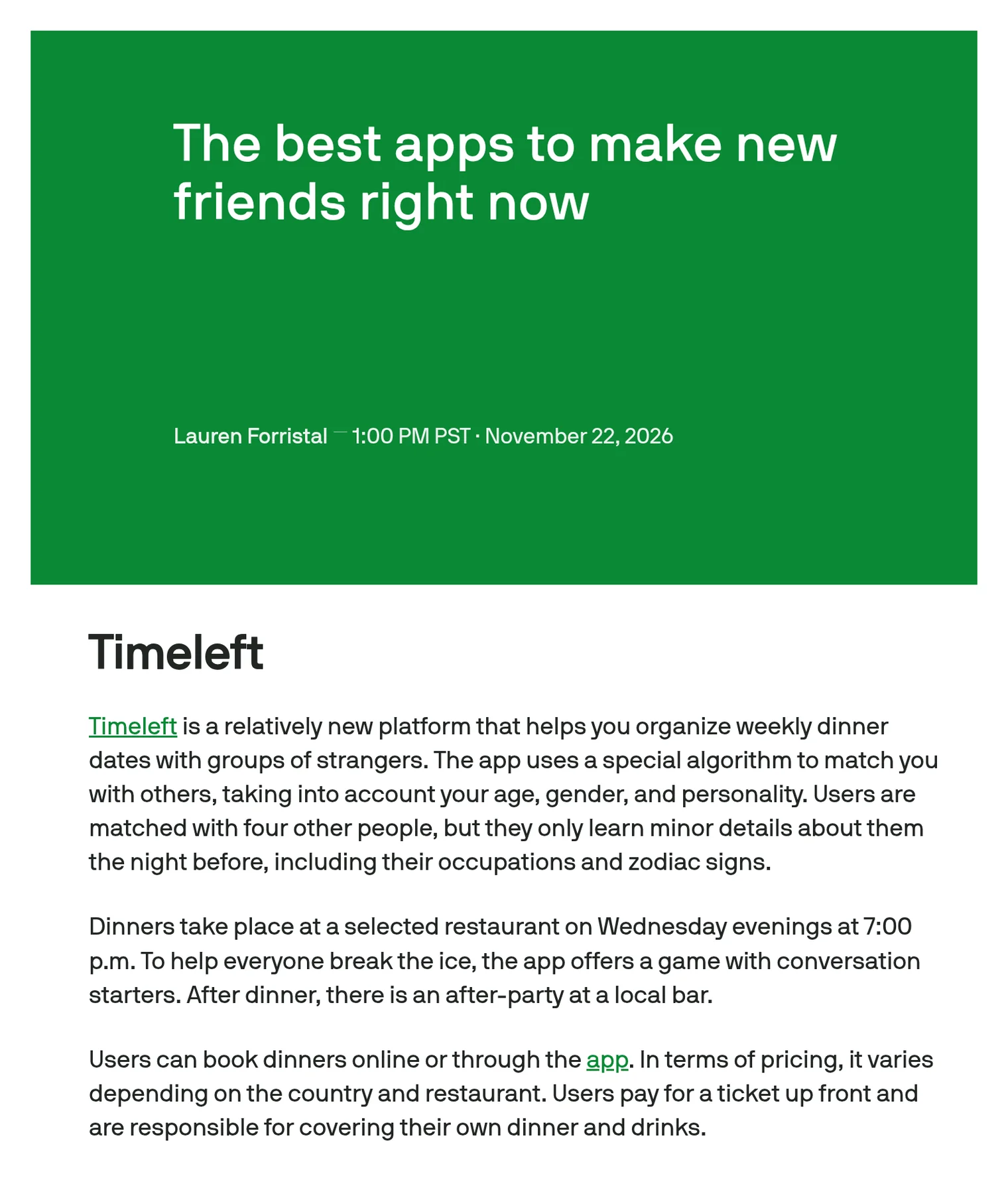
This post starts from a recent story. On 22 November 2026, TechCrunch published a roundup by Lauren Forristal on apps that help people make new friends: The best apps to make new friends right now.
Several of these apps are built around going out in small groups:
- Timeleft matches people into dinners with strangers. TechCrunch says dinners take place at a selected restaurant on Wednesday evenings at 7 p.m., followed by an after party at a local bar.
- 222 sends invitations to nearby public events, such as wine bars and comedy clubs.
- Pie sorts people who RSVP to its events into groups of six.
- Mmotion is only available in New York City. TechCrunch says it highlights new bars and restaurants on a map.
- Les AmÃs runs in New York and encourages local events like wine tastings.
- Clyx finds events using data from platforms like Ticketmaster and TikTok. It runs in Miami and London today, with New York City at the top of its expansion list.
From app to table: a group still looks you up before they sit down, so your listing and website have to be ready.
Why does this matter to a New York owner? More people are going out in small groups, often with strangers or new friends. Somebody in that group still has to pick or check a place. We cannot say how each app chooses its venues. But the groups that meet up, and the friends they bring next time, will look you up before they go.
Check 1: Do you show up when groups search?
Groups type what they need. Google’s autocomplete in the US suggests searches like “restaurants for large groups nyc”, “group dining nyc”, “private dining nyc”, and even “private dining nyc 20 people”.
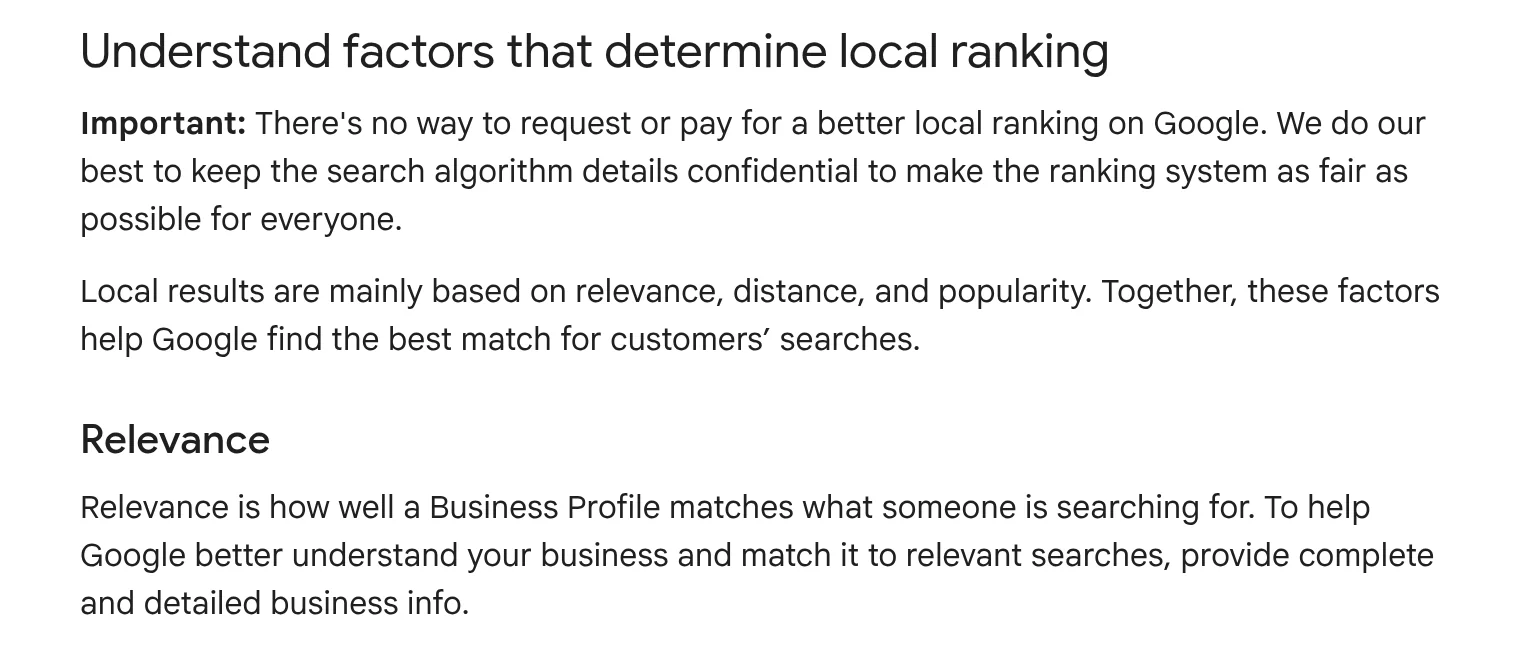
Google says local results are mainly based on relevance, distance and prominence. Relevance means how well your profile matches the search. So if nothing on your profile or website says you take groups, you give Google little reason to match you to a group search.
Try it yourself. Search on your phone for “restaurant for large groups” plus your neighbourhood, like “Astoria” or “West Village”. Then try “private dining” plus your neighbourhood.
Check 2: Does your Google profile answer a group’s questions?
Your Google Business Profile is often the first place a group checks. A few parts matter most for groups.
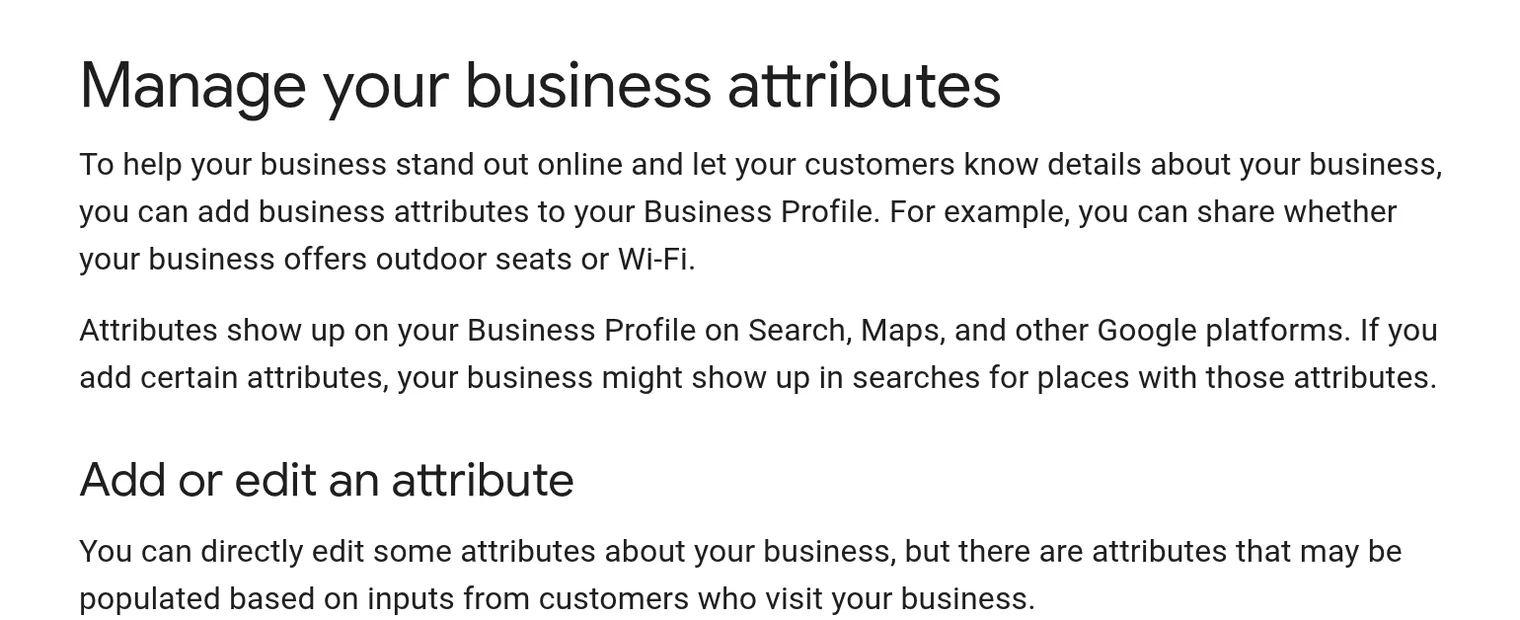
- Attributes. Google says attributes show on Search and Maps, and “if you add certain attributes, your business might show up in searches for places with those attributes.” Some you can edit yourself. Others come from customers who visit. Fill in every attribute you are offered that is true.
- Description. Google says your description should cover what you offer and what makes you special, with no links and no more than 750 characters. If you host groups, say so in plain words, like “We seat groups of up to 16 and have a private room for 30.”
- Booking and menu. Google says some business categories can add links for reservations, and food and drink businesses can use the menu editor to keep items and prices accurate. A group organiser wants to see the menu and book in one place.
- Photos. Show your large tables and private room, not only plates of food.
Check 3: Does your website have a page for groups?
When a group organiser clicks through to your site, they want three answers fast: how many people you can seat, what it costs, and how to book.
A simple group or private dining page helps a lot:
- Group sizes you can take, and any private or partly private space.
- A set menu or price per person, even a range.
- Minimum spend or deposit rules, if any.
- A short enquiry form or booking link, plus a phone number.
- Real photos of the space set up for a group.
Keep these facts in plain text on the page, not only inside a PDF menu. People skim on phones, and search engines read text more easily than files.
Check 4: Are you listed where event apps look?
Some of these apps work with events, not just venues. TechCrunch says Clyx pulls event data from platforms like Ticketmaster and TikTok, and 222 sends people to public events at places such as wine bars and comedy clubs.
So if you run tastings, trivia, comedy or live music, list those events in public. Post them on your website and social channels, and on the ticketing or event platforms you already use. We cannot promise any app will pick your event up. But an event nobody can find online cannot be picked up at all.
Four checks: show up in group searches, answer questions on your profile, add a group page, and list your events in public.
When it is time to get help
Some fixes take an afternoon, like updating attributes and your description. Others take steady work: building a group dining page that ranks, matching your profile to the searches groups actually make, and tracking which searches bring bookings. That is the work we do. For the basics, see our Google Business Profile guide. If reviews are holding you back, read what to do about fake Google reviews.
The short version
- TechCrunch reported this week on friendship apps that send small groups out to eat and drink, several in New York.
- Groups search with words like “large groups”, “group dining” and “private dining” plus a neighbourhood.
- Google matches local searches on relevance, distance and prominence.
- Fill in true attributes, mention groups in your description, and add booking and menu details.
- Give groups a clear web page with sizes, prices and a way to book.
- List your events in public so people and event apps can find them.
FAQs
How do I get my restaurant found by groups in New York?
Make sure your Google Business Profile and website clearly say you take groups, with sizes, prices and a way to book. Then check group searches for your neighbourhood.
Can I mark my restaurant as good for groups on Google?
Google says you can edit some attributes yourself, while others come from customers who visit. Fill in every true attribute you are offered.
Do friendship apps like Timeleft send customers to restaurants?
TechCrunch reports Timeleft dinners happen at a selected restaurant on Wednesday evenings. We do not know how each app chooses venues.
Should I put my group menu in a PDF?
You can offer a PDF, but put the key facts in plain text too: group sizes, price per person and how to book.
Can I pay Google to rank higher for group searches?
No. Google says there is no way to request or pay for a better local ranking.
Are groups finding your restaurant, or your neighbour’s?
We will check how your restaurant shows up for group searches in your part of New York, and tell you what to fix first, free. Talk to us through our form or on WhatsApp at +91 99131 53530. The first conversation is free.