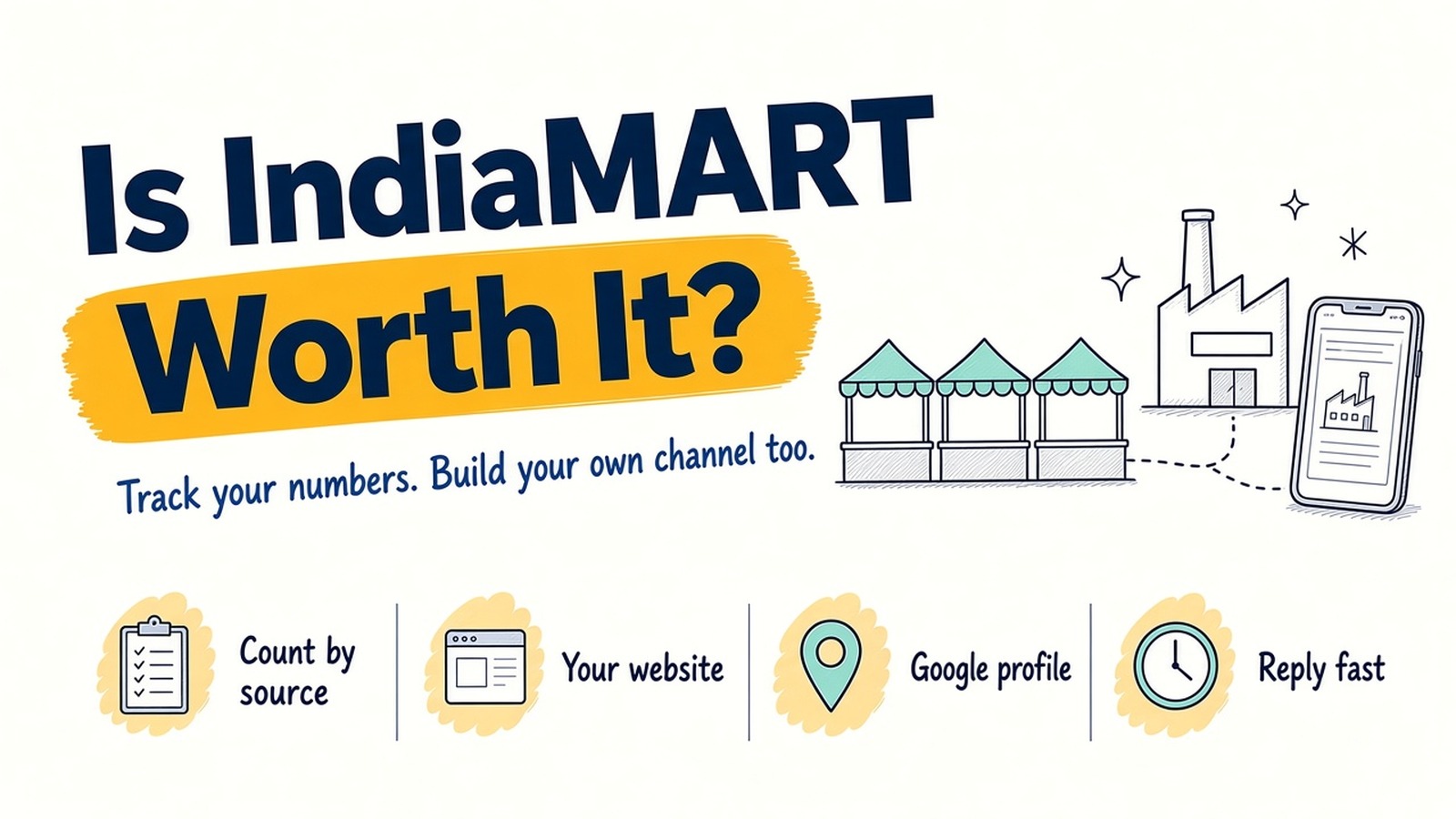
Think of a big trade mela. It brings crowds you could never gather on your own. Many buyers walk past your stall, stop, ask the price and move on to the next stall selling something similar. When the mela ends, you pack up. The crowd was real, but none of it belongs to you.
B2B portals work a lot like that mela, and they do a valuable job. IndiaMART is one of them, and a big one. It reported 8.9 million supplier storefronts as of 30 September 2026.
So is IndiaMART worth it for your factory? It can be, when you track your results, and it works best alongside a channel you own. Plenty of enquiries do not always mean plenty of orders, and often the gap is not the portal. It is that the business has no other place where buyers can find it, judge it and contact it directly.
This post shows you how to check where your real orders come from, and how to build your own enquiry channel alongside IndiaMART or any other portal.
The screenshots in this post are from the public Gartner research PDF Win More B2B Sales Deals, Google Business Profile Help and the Thomas 2021 Industrial Buying Habits report, as they appeared on 19 November 2026.
A mela brings a crowd, but the crowd leaves when the stalls come down.
Why more enquiries do not always mean more orders
An enquiry is only the start. Between an enquiry and an order, many things can go wrong:
- The buyer was only comparing prices.
- The quantity was too small for you.
- The buyer could not find enough proof that you are reliable.
- Someone else replied first.
- Your team spent time on the call, but no quote went out.
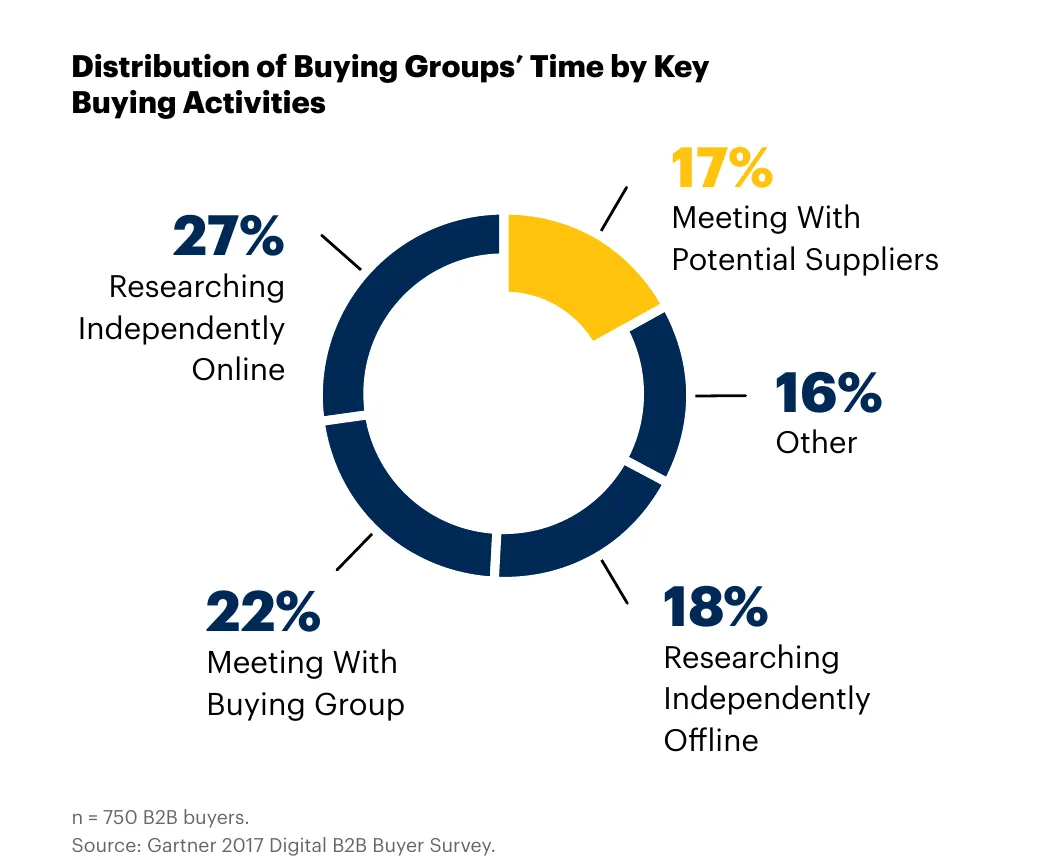
Each of these costs you time, and time on the phone is money. Also, buyers do most of their checking before they talk to you. Gartner’s survey of 750 B2B buyers found they spent only 17% of their buying time meeting potential suppliers, and 27% researching on their own online.
So if a buyer finds you, compares you and then looks you up on Google, what they find there decides a lot.
Is IndiaMART worth it for you? A 10-minute check
Take the last three months. For each source, count four numbers:
- Enquiries received
- Enquiries your team replied to
- Quotes sent
- Orders won
Do this separately for each source: IndiaMART or any other portal you use, your website, Google Business Profile, phone calls from old customers, exhibitions and social media.
Then divide orders by enquiries for each source. You do not need a benchmark. Just compare your own sources with each other. Also note the average order value from each source, because ten small orders can be worth less than one large one.
This split shows you which channel really pays, and which one only keeps the phone busy.
If you do not know where an enquiry came from, start asking every new caller one question: “How did you find us?”
Fill in your own numbers for each source: enquiries, replies, quotes and orders.
Keep IndiaMART, and build your own enquiry channel
We do not suggest leaving IndiaMART or any portal that brings you business. We suggest adding a channel you own, so you are not depending on one source.
Your own channel has four parts:
- Your website. Product pages with specs, MOQ and lead times, real factory photos and an easy RFQ form. Our 15-point check of what B2B buyers look for shows what to fix first.
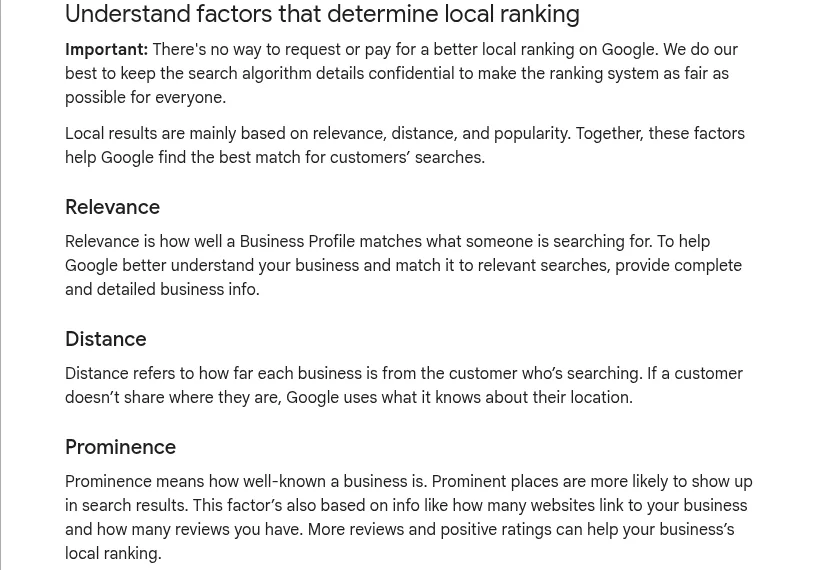
- Google Business Profile. Google says more reviews and positive ratings can help your local ranking, and that photos and videos help tell your story.
- SEO. Pages that answer what your buyers search for, by product, application and city or country.
- Targeted social media. Reach the exact people who buy from you, in the places where they are.
Two examples from our own work, by industry only:
For a diamond manufacturer, our team visited its factory, its offices and the places it gets rough stones from. We wrote about each step from rough stone to polished diamond, with real photos and videos, and made the site faster. This helped it bring buyer leads from the USA, Hong Kong and other countries. Read our diamond manufacturing SEO case study.
For an office furniture manufacturer, we targeted architects and business owners through social media in Ahmedabad, Vadodara, Dahej and nearby industrial towns across Gujarat. The buyers were chosen first, then the places, then the content.
If you also sell abroad, our guide on getting export orders from foreign buyers online covers that side.
Four parts of a channel you own: your website, Google Business Profile, SEO and targeted social.
Make your own enquiries better qualified
On your own website, you decide what a buyer sees before they contact you. Use that.
- Show MOQ and lead times. Small or wrong-fit buyers filter themselves out.
- Ask the right questions on your RFQ form. Product, quantity, city or country, target date, and an option to upload a drawing.
- Show proof. Certifications, capacity, process photos and the industries you serve.
- Write for your best buyers. If your best orders come from contractors or exporters, write pages for them, not for everyone.
Buyers care about this information. In a 2021 Thomas survey of 401 industrial buyers in the US and Canada, “availability/lead times” ranked first among the factors that matter most, and “quality certifications” ranked third.
Reply fast, on every channel
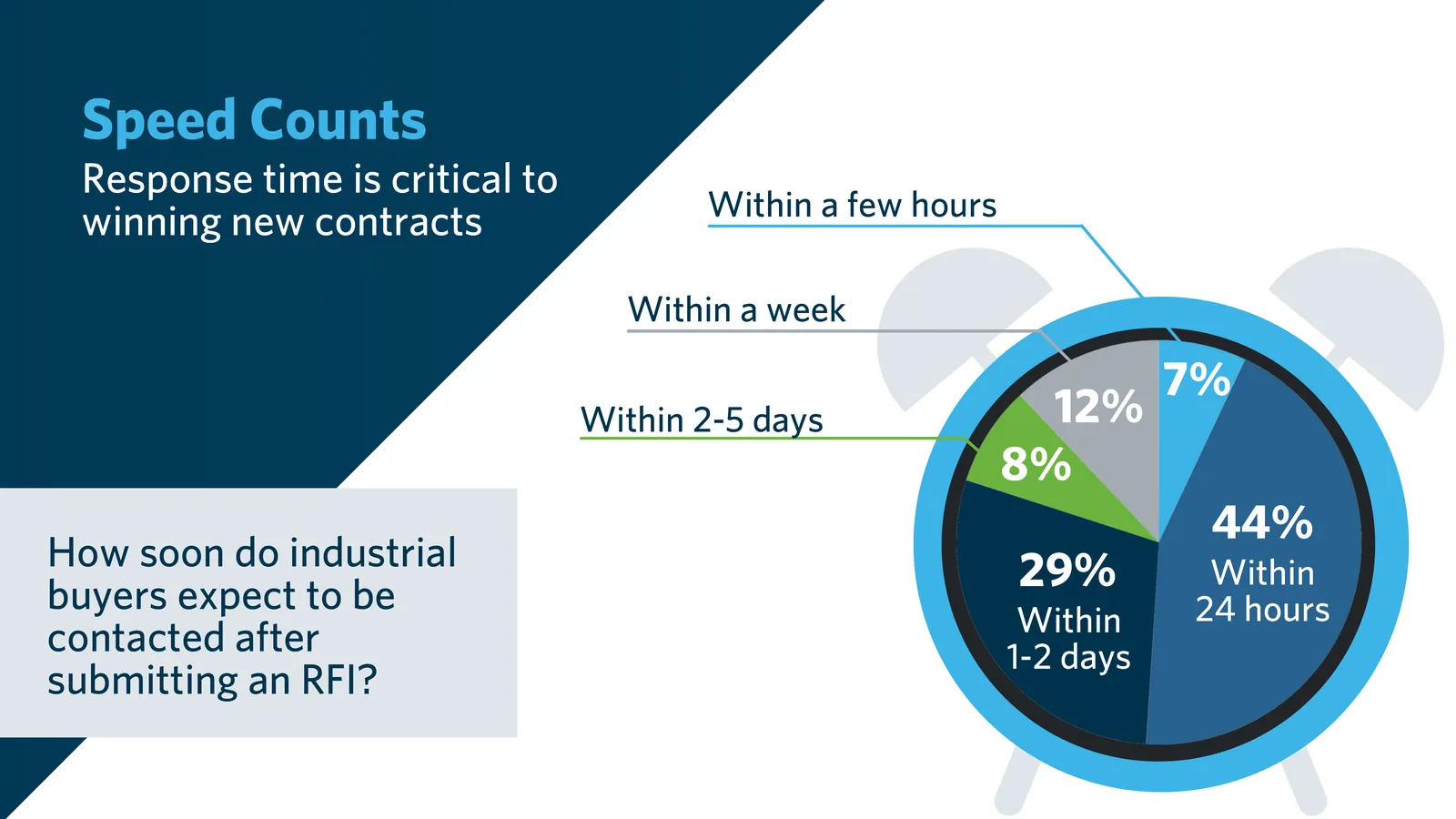
A good enquiry can go cold in a day. In the same Thomas survey, 44% of buyers expected to be contacted within 24 hours of sending an enquiry, and another 7% within a few hours.
- Give one person the job of first reply, every working day.
- Use WhatsApp and phone links that work in one tap on your site.
- Send a short first reply quickly, even before the full quote is ready.
When it is time to get help
Some fixes you can do yourself, like asking “How did you find us?” and adding MOQ to a page. Others take real work: rebuilding a website around product pages, getting found on Google for the right searches, and running social campaigns aimed at the right buyers. That is the work we do for manufacturers.
The short version
- IndiaMART can be worth it when you track results. Keep any portal that brings orders.
- Check each source: enquiries, replies, quotes and orders, for the last three months.
- Compare your own sources with each other. No outside benchmark needed.
- Build your own channel: website, Google Business Profile, SEO and targeted social.
- Show MOQ, lead times and proof so better buyers contact you.
- Reply fast. In Thomas’s survey, 44% of buyers expected contact within 24 hours.
FAQs
Is IndiaMART worth it for a small manufacturer?
It can be, if you track it. Count IndiaMART enquiries, quotes and orders for three months and compare them with your other sources. It works best alongside a channel you own.
Is IndiaMART free for sellers?
IndiaMART describes a freemium model, with free suppliers and paid subscription packages. Check its official site for current plans before you decide.
Should I stop using IndiaMART?
Not if it brings you orders. Check your numbers by source first. Then add a channel you own, so you do not depend on one source.
How do I know which enquiries are worth my time?
Track enquiries, replies, quotes and orders for each source. The source with the best orders for the time spent is worth growing.
How do I get more serious buyers to contact me directly?
Show MOQ, lead times, certifications and real factory photos on your website, and use an RFQ form that asks for quantity and target date.
Not sure which of your enquiry sources really pays?
We will review where your enquiries come from and how your website turns visitors into enquiries. Talk to us through our form or on WhatsApp at +91 99131 53530. The first conversation is free.