Before a family says yes to a rishta, they ask around quietly. Who is the family? What do they do? What do people say about them? Only after that does anyone pick up the phone.
B2B buyers do the same with your factory. A procurement manager, an importer, an architect or a distributor checks you quietly first. Your website is where most of that checking happens. If they do not like what they see, they do not call to complain. They simply send their enquiry to someone else, and you never know it happened.
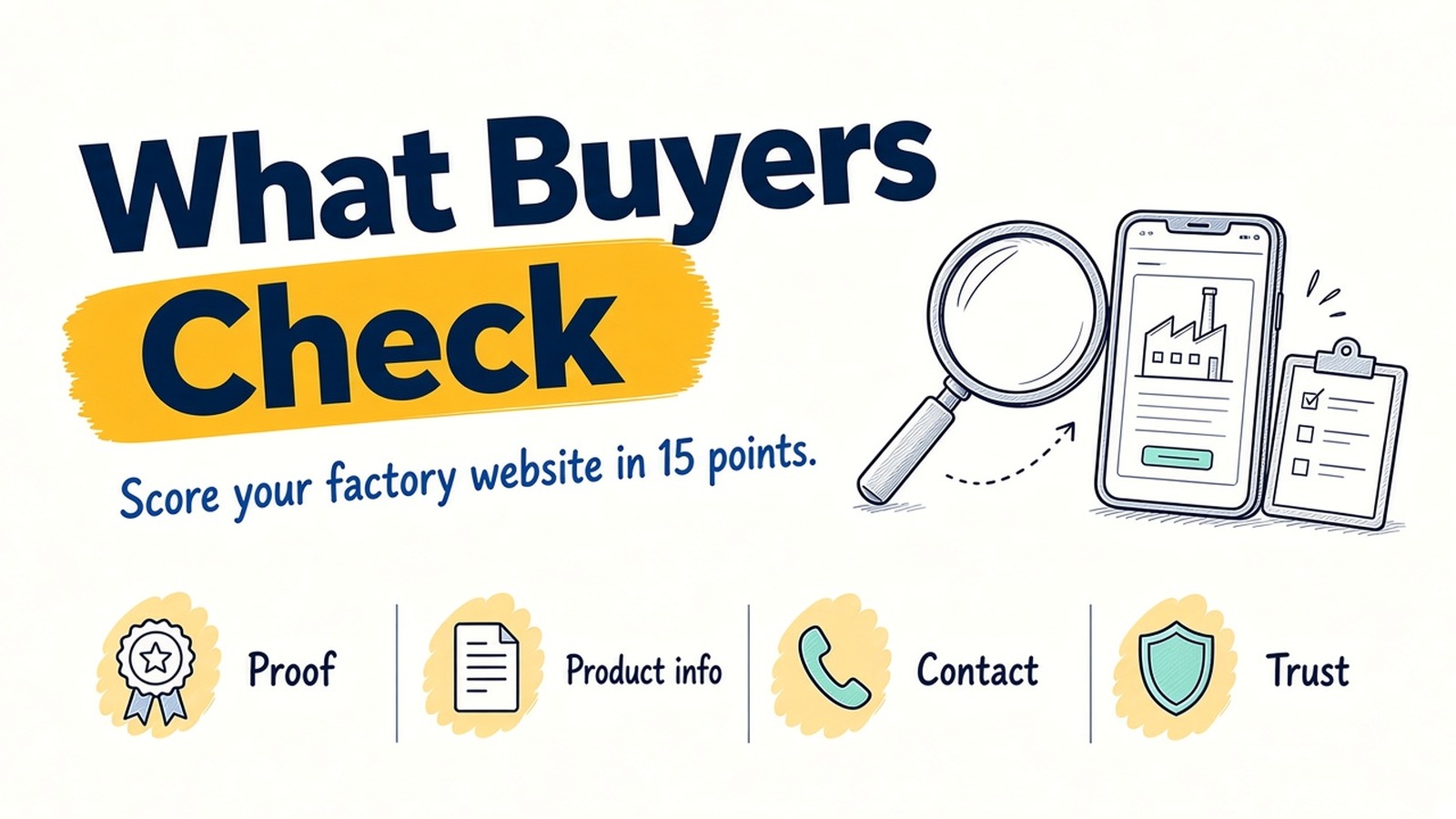
Here is what serious buyers look for, as a 15-point check you can score your own site against.
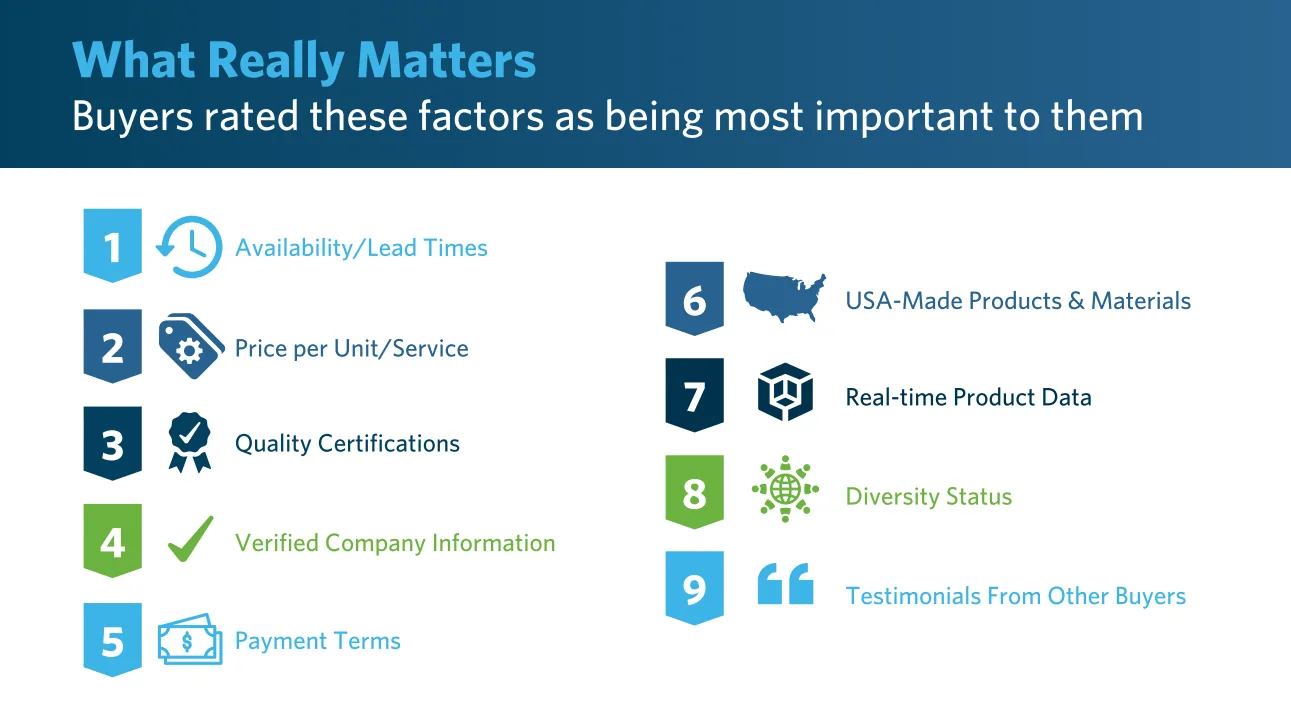
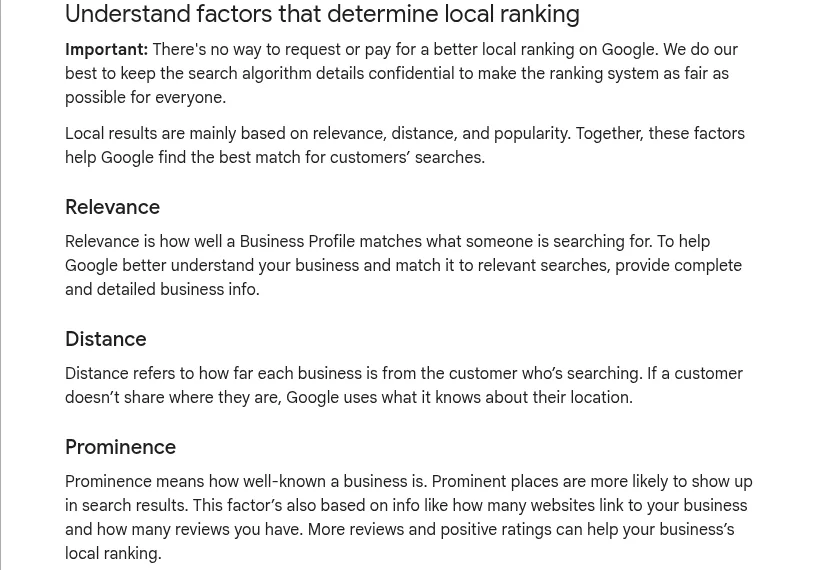
The screenshots in this post are from the public Thomas 2021 Industrial Buying Habits report, Google Business Profile Help and Google Search Central, as they appeared on 18 November 2026.
They check before they call.
Buyers decide before they call you
Research backs this up.
- Gartner surveyed 750 B2B buyers. They spent only 17% of their buying time meeting potential suppliers, and 27% researching on their own online.
- Thomas surveyed 401 industrial buyers in the US and Canada in 2021. 40% said the quality of a supplier’s website affects their decision to partner “a lot”, and 51% said “somewhat”. 68% vet fewer than 5 suppliers.
So the shortlist is small, and your website decides whether you are on it. Ranking on Google is not enough either. We explain why in why content ranks but still brings no business.
Give your site 1 point for each item below that it clearly has. Be strict. “Somewhere in a PDF” does not count.
Proof that you are a real, capable factory (points 1 to 5)
- Real factory photos and videos. Your own shop floor, machines and team, not stock images.
- Capacity and machinery. Monthly capacity, key machines and the size of your unit, in plain words.
- Certifications. The ones you actually hold, such as ISO or product approvals, with the certificate number or a scan.
- An About page with real people. The founders and key team, with names and faces, your full factory address and how long you have been running.
- Industries you serve and where you ship. List the industries and countries you supply, without naming clients if they prefer privacy.
In the Thomas survey, buyers ranked “quality certifications” third and “verified company information” fourth among the factors that matter most to them.
Product information a buyer can use (points 6 to 10)
- One web page per product or product family. Specs, sizes, grades, materials and tolerances on the page itself. Keep the PDF as a download, not as the only place the information lives.
- Minimum order quantity. Even a range helps a buyer decide if you fit.
- Lead times. How long from order to dispatch, for standard and custom orders.
- Process photos and videos. How the product is made and checked.
- Applications. Where and how the product is used, so a buyer who does not know the exact product name can still find you.
Lead times matter most. In the Thomas survey, “availability/lead times” ranked first, ahead of “price per unit”.
We saw the power of process content with a diamond manufacturer. Our team visited its factory, its offices and the places it gets rough stones from. We wrote about each step from rough stone to polished diamond, added real photos and videos, and made the site faster. This helped it bring buyer leads from the USA, Hong Kong and other countries. Read our diamond manufacturing SEO case study.
A buyer on a phone should not have to open a long PDF to find one size.
Easy to contact, fast to reply (points 11 to 13)
- A simple RFQ form. Ask for product, quantity, country or city, target date and an option to upload a drawing. Keep it short.
- WhatsApp and phone you can tap. On a phone, one tap should open a chat or a call.
- A reply promise you keep. Say when you will reply, and do it.
Speed wins deals. In the Thomas survey, 44% of buyers expected to be contacted within 24 hours of sending an enquiry, and another 7% within a few hours.
Trust signals buyers check outside your pages (points 14 and 15)
- A Google Business Profile with reviews and photos. Google says more reviews and positive ratings can help your local ranking, and that replying to reviews shows you value feedback. Add real photos and videos of your unit.
- A fast site that works on a phone. Google says its ranking systems look to reward content that gives a good page experience. A slow, broken mobile page also loses buyers before they read a word.
If you sell abroad, these checks matter even more, because the buyer cannot visit first. Our guide on getting export orders from foreign buyers online covers the next steps.

What your score means
- 13 to 15: your site is working for you. Keep it updated.
- 8 to 12: buyers can find you, but some leave with questions. Fix the missing points, starting with lead times and specs.
- 0 to 7: your site is probably losing enquiries every month without you knowing.
Most owners can fix a few points on their own, such as photos and a WhatsApp button. Others take real work: rebuilding PDF catalogues into product pages, making the site fast and planning content buyers search for. That is the work we do.
The 15-point score sheet: proof, product info, contact and trust.
The short version
- B2B buyers check your website quietly before they send an enquiry.
- Gartner found buyers spend only 17% of buying time meeting suppliers.
- Score your site on 15 points: proof, product info, contact and trust.
- Put specs, MOQ and lead times on web pages, not only in PDFs.
- Reply fast. In Thomas’s survey, 44% of buyers expected contact within 24 hours.
- A low score means you are probably losing enquiries without knowing it.
FAQs
What should a manufacturing company website have?
Real factory photos, capacity, certifications, an About page with real people, product pages with specs, MOQ and lead times, a simple RFQ form, WhatsApp and a fast mobile site.
Why is my manufacturing website not generating leads?
Usually because buyers cannot quickly find proof, specs, lead times or an easy way to contact you. Score your site on the 15 points above to see the gaps.
Are PDF catalogues bad for my website?
Keep them as downloads, but put the key specs on web pages too. A buyer on a phone should not have to open a long PDF to find one size.
How fast should I reply to an RFQ?
As fast as you can. In Thomas’s 2021 survey, 44% of industrial buyers expected contact within 24 hours.
Not sure what your score really is?
Send us your website and we will tell you what a buyer sees, point by point. Talk to us through our form or on WhatsApp at +91 99131 53530. The first conversation is free.